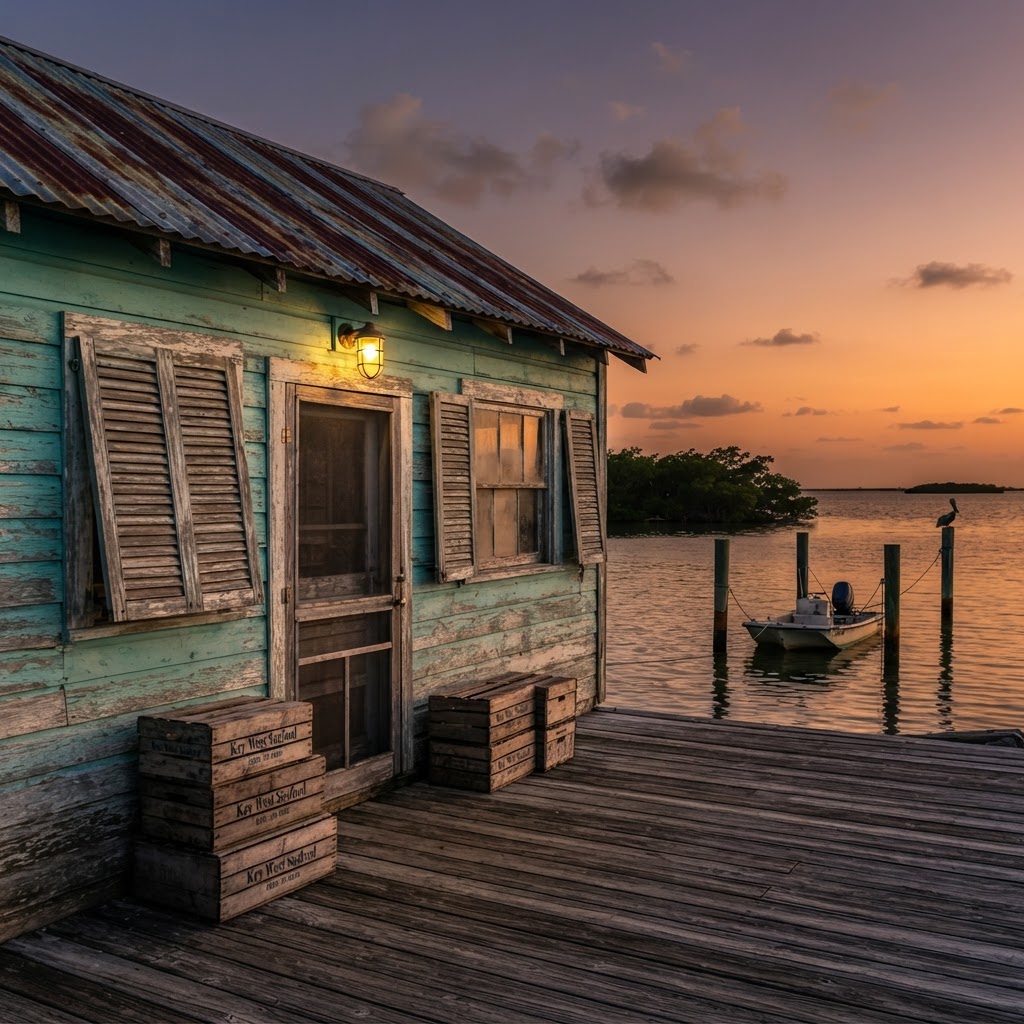
Where the Scales Are Held: The Unvarnished Tradition of the Florida Keys Fish Shack
The Architecture of Authenticity
There is a specific kind of silence that falls over an island afternoon when the heat reaches its peak. It is a time when the tourists are mostly huddled under umbrellas on Duval, but if you know where to turn, you find the locals tucked away under a tin roof or a broad sea grape canopy. I grew up with the understanding that a meal wasn't just fuel; it was an anchor. My grandfather used to say that you could tell the health of a town by the state of its fish shack. If the paint was peeling but the cooler was full, you were in a place with a future.
These structures—often framed in sturdy cypress or remnants of reclaimed Dade County pine—are the antithesis of the polished, over-designed establishments that seem to be encroaching on every corner of the coast. A true Keys fish shack doesn't need climate control. It needs a reliable breeze, a set of louvered shutters that have seen a few dozen hurricanes, and a steady supply of whatever the boats brought in that morning. When you walk into a place like the old-school counters you find tucked away in Stock Island or along the quiet stretches of Big Pine, you aren't paying for decor. You are paying for the fact that the hogfish you are eating was likely swimming twelve hours ago.
The Ritual of the Catch
There is an inherent honesty in the way we prepare fish down here. It is rarely fussed over. A quick dusting of flour, a hot sear in a heavy pan, perhaps a squeeze of key lime if the tree in the backyard was bearing fruit. We don't hide the character of the fish. In a world that often demands constant reinvention, there is a profound comfort in the consistency of a blackened snapper or a conch fritter that tastes exactly the way it did when I was a boy.
I remember sitting with my father at a weather-beaten wooden table, watching the commercial boats come into the docks. The men working the lines were the same men who owned the shacks. There is a seamless connection here between the labor and the plate that is becoming increasingly rare. It is a tactile experience. You feel the grit of the salt air, the texture of the rough-hewn floorboards beneath your sandals, and the weight of a local life that moves at the speed of the tide. When you buy into this island—whether it’s a modest bungalow on a quiet lane or a larger estate near the water—you are also buying into this ecosystem. You become part of the lineage of people who value the source of their food as much as they value their property values.
More Than Just a Meal
It’s important to clarify that these spots aren't staging areas for a lifestyle brand. They are functional, living components of our community. They serve the mechanic, the dive boat captain, the teacher, and the visitor who has the sense to wander off the beaten path. I find that when I talk to clients about why they want to live here, they rarely mention the fancy bistros. They talk about the ability to walk to a small market, to know the person behind the counter, and to feel like they are participating in a local tradition that existed long before the current wave of development.
These shacks are the true architecture of Key West. They are built to be permeable, to let the salt air move through the rafters, to endure the humidity, and to age with grace. They don't look for perfection; they look for endurance. There is a lesson in that for anyone looking to invest here. The properties that hold their value and their soul are the ones that respect this climate, the ones built with cedar or pine that can breathe, and the ones that prioritize connection to the environment over the latest trends in finishings.
A Quiet Resolve
As the afternoon light shifts and the shadows of the palms begin to stretch across the limestone, these little corners of the island start to hum with a different energy. The dinner rush in a place like this isn't a frenzy. It’s a slow-moving conversation, a series of nods between neighbors, and the clinking of cold drinks against the backdrop of a distant outboard motor. It is a reminder that simplicity is, in its own right, a high standard of living.
I often tell those who are new to the area to spend less time worrying about the 'right' neighborhood and more time finding where they feel the rhythm of the island. If you can sit at a counter, eat a fresh piece of fish, and feel completely at peace with the world, you’ve found your place. We don't need the bells and whistles here. We have the wind, the water, and the good sense to keep things simple. And frankly, that is exactly why we wouldn't want to live anywhere else.
Written by
Damian Vantriglia
Realtor® · Key West