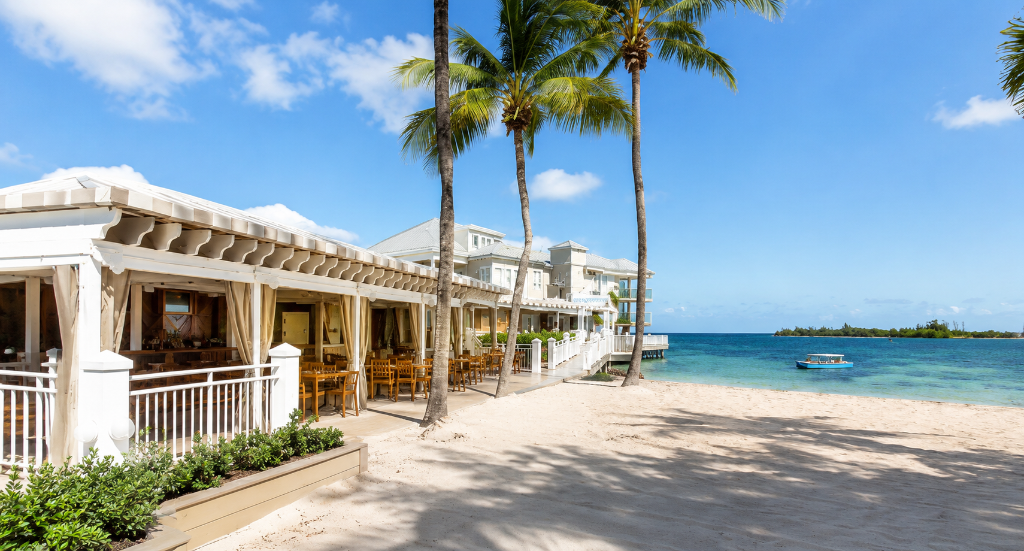
Waterfront Traditions and the Evolution of The Pier House
There is a specific cadence to the water’s edge in Key West. It is rarely the manicured expanse you might find in other coastal destinations, but rather a more functional, storied connection between the land and the Straits of Florida. When I think about this relationship, my mind inevitably returns to the Pier House on Duval Street. It occupies a space that feels like a hinge point for the island, sitting at the transition between the vibrant chaos of the historic commercial district and the quiet, salt-sprayed reality of the harbor.
Why does the Pier House hold a unique place in Key West history?
The Pier House is significant because it was one of the first properties to formally redefine the waterfront experience for visitors while maintaining a genuine, unvarnished connection to the Key West aesthetic. Established in the late 1960s, it avoided the sterile architecture that defined many mid-century hotel developments elsewhere in Florida, choosing instead to lean into the scale of the Old Town neighborhood. It proved that a modern resort could exist on the island without erasing the character of the streets surrounding it.
What defines the beachfront resort tradition in Key West?
Key West’s resort tradition is defined by its intimacy and its accessibility to the historic core rather than by vast, isolated stretches of private sand. Unlike the massive estates found on the mainland, our beachfront properties are often nestled into narrow, historic footprints where the pool deck or the lounge chair feels like an extension of the sidewalk. The Pier House embodies this by bringing the guest right to the water's edge at the very end of our most famous thoroughfare. It is a reminder that on an island this small, there is no separation between the 'resort' and the 'community'—everything is interconnected.
How does the waterfront shape our local real estate identity?
Waterfront property in Key West is a limited, finite resource that demands a high level of stewardship from its owners. Whether it is a private residence in the Casa Marina area or a commercial site like the Pier House, the salt air and the exposure require a constant cycle of maintenance that keeps the architecture honest. We see this in the use of durable materials like Dade County pine in our older structures, or in the deliberate placement of shutters and overhangs that have protected our buildings for over a century. When you own property on the water here, you are entering into a long-standing dialogue with the ocean.
Looking back, the evolution of the waterfront has been a steady process of finding balance. We have moved from the industrial era of the Historic Seaport—where shipping and turtle canning were the primary activities—to a more measured, mixed-use landscape. For those of us who grew up here, seeing these spaces adapt while keeping their original soul intact is what makes Key West feel like a living, breathing place rather than a static museum. It is an ongoing project, one that requires us to be as thoughtful about the future as we are respectful of the past.
Written by
Damian Vantriglia
Realtor® · Key West