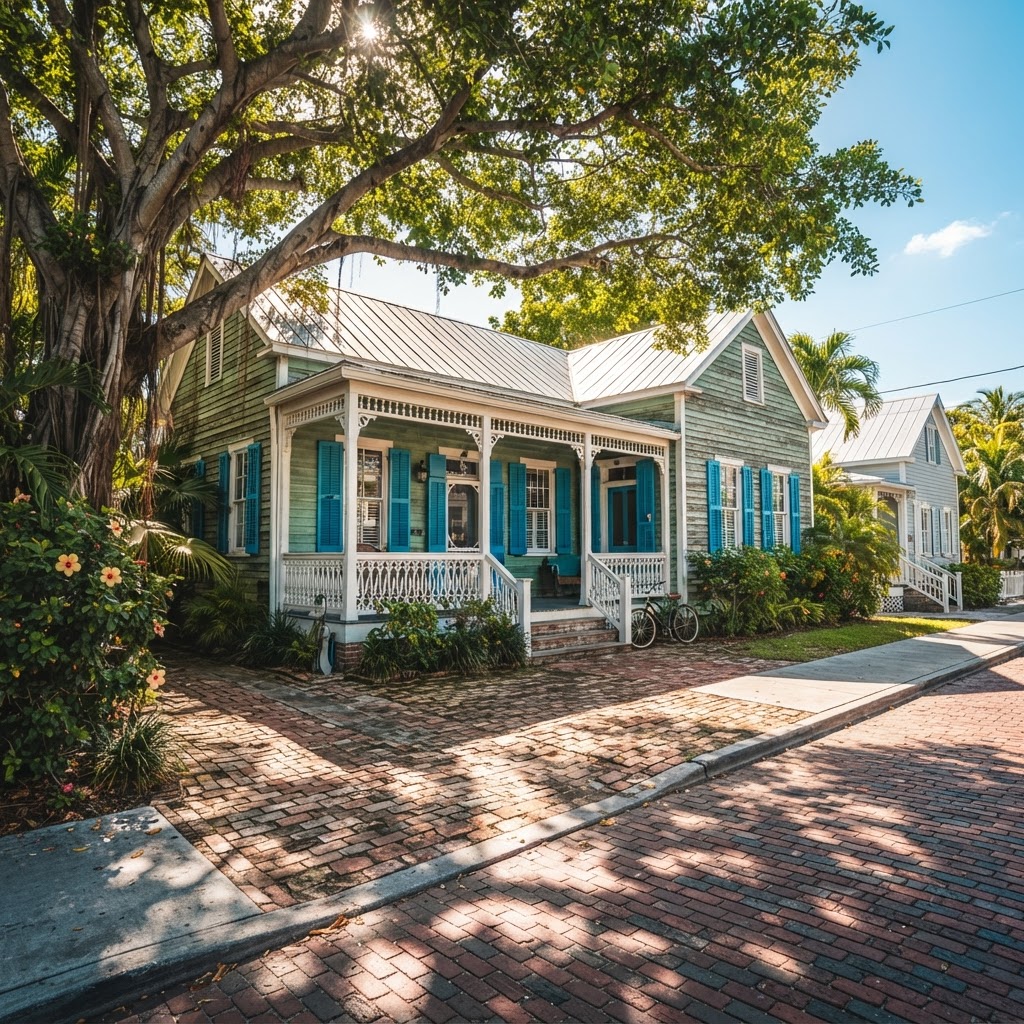
The Quiet Gravity of Casa Marina
A Different Kind of Silence
When I was a boy, the stretch between White Street and the southern coast felt like the edge of the world. The rest of Old Town moved with a frantic, sun-bleached energy, but as you crossed into the Casa Marina neighborhood, the streetlights seemed to hum at a lower frequency. It is still that way today. You leave behind the bicycle traffic of Duval and the layered hum of the harbor, and you arrive at a place where the primary sound is the rustle of frangipani leaves in the trade winds or the distant, rhythmic thud of the ocean against the jetty.
The neighborhood was born from Henry Flagler’s ambition to build a terminal for his Overseas Railway, and while the tracks are long gone, the scale of his intent remains. You see it in the width of the streets and the deliberate spacing of the homes. These aren't the tucked-in, shoulder-to-shoulder cottages of the Bahama Village grid. Here, there is room for a banyan tree to stretch its roots and for a garden to be more than just a passing thought.
The Language of Architecture
Walking past the homes on United or Reynolds, you see the full spectrum of our island’s building history. While much of the older, central historic core is defined by the dense, structural integrity of Dade County Pine—that amber-hued, rock-hard wood that built our heritage—the Casa Marina district showcases a beautiful evolution. You find grander, early-twentieth-century designs that incorporate cypress and cedar, materials that weathered our storms and salt air with a quiet, graying grace.
There is a particular architectural discipline here. You see the deep porches that serve as the real living rooms of these houses, angled specifically to catch the prevailing breezes. The craftsmanship is honest; you can still spot the original millwork around the Bahamian shutters and the careful pitch of the tin roofs. These homes were built for people who understood that in Key West, the house is merely a frame for the environment outside. When you restore a property here, you aren't just renovating a floor plan; you are tending to a legacy of craftsmanship that relies on the ventilation and light patterns established a century ago.
The Economics of a Neighborhood
People often ask me about the investment climate in this part of town. I usually suggest they stop looking at the spreadsheets for a moment and simply observe the turnover—or lack thereof. There is a persistent stability in Casa Marina. Families who move here tend to stay, and property rarely changes hands with the urgency you see in other zip codes. This is the top of the market, and it requires a certain temperament. Most transactions here are cash, and many of my clients view the lack of traditional insurance dependency as a strategic, long-term approach to risk management. It is a calculated decision, one that demands a deep comfort with the island’s natural cycles. You aren't buying a commodity; you are securing a foothold in a neighborhood that has proved, over a hundred years of hurricanes and economic tides, that it is not going anywhere.
The Living Shoreline
The real anchor of the neighborhood, of course, is the beach. Having the only substantial stretch of soft sand on the island isn't just a recreational perk; it defines the lifestyle. I have sat on the wall at Higgs Beach at sunrise more times than I can count. It is a grounding ritual. You watch the sun climb over the Atlantic, the fishing boats heading out from the harbor in the distance, and the early morning joggers finding their rhythm. It is a reminder that we live on a sandbar in the middle of a vast, indifferent ocean. That awareness—that smallness—is what keeps us humble.
Casa Marina does not shout. It doesn't need to compete with the nightlife or the spectacle of the sunset celebration. It simply exists, a collection of grand porches, deep-rooted trees, and quiet streets that hold the history of this island with a steady hand. It is a place for those who have finished their running and are ready to settle into the pace of the tides. When you find a house here, you aren't just finding a place to sleep; you are joining a rhythm that has been beating since the trains first rolled into the station.
Written by
Damian Vantriglia
Realtor® · Key West