The Persistence of the Page: Why Key West Remains a Muse
The Geometry of Silence
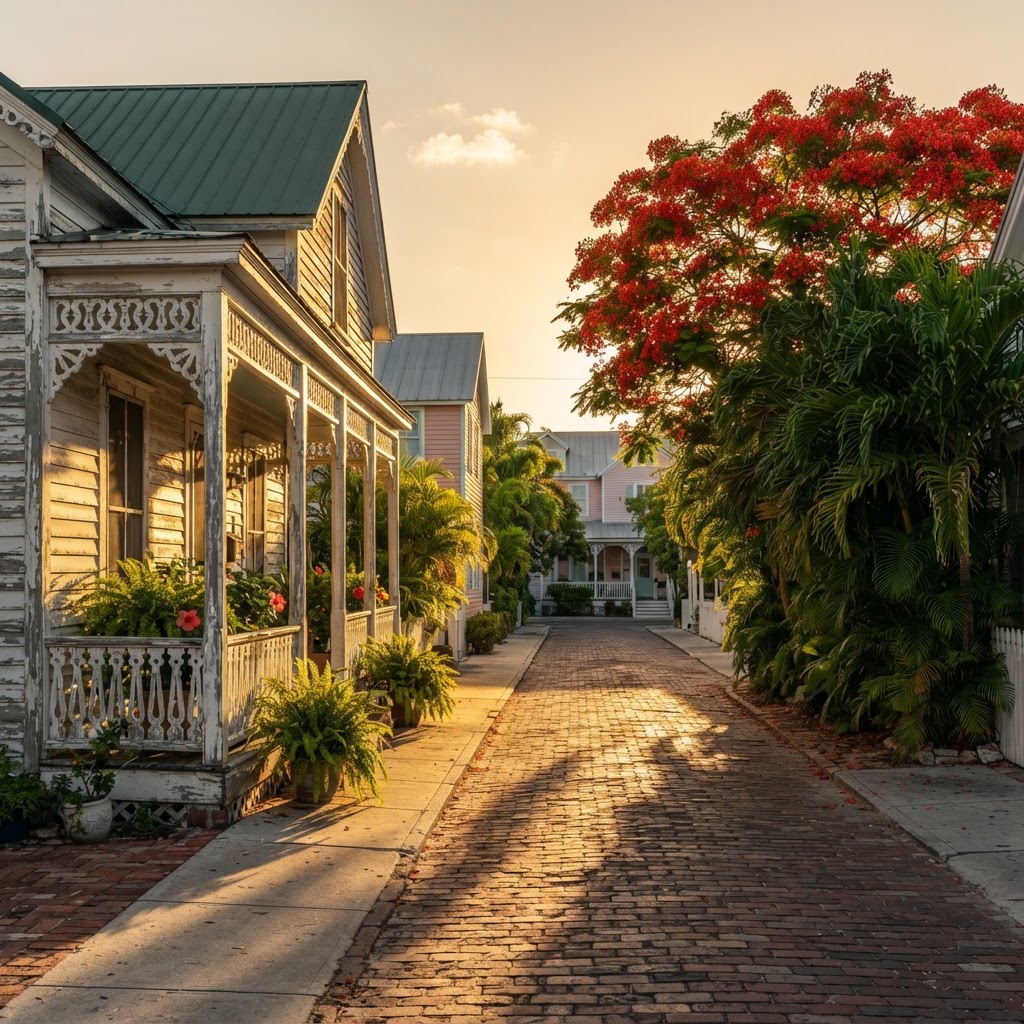
There is a specific kind of quiet that settles over Key West just after the midday sun begins to dip. It is not an empty silence; it is a heavy, rhythmic stillness, punctuated only by the distant hum of a bicycle chain or the rhythmic clatter of a Bahamian shutter being pulled into place. It is this atmosphere that has, for nearly a century, invited writers to stop moving and start observing. Growing up here, I watched my father work with properties that were built long before the modern world rushed to digitize itself. These houses, with their Dade County pine walls and high ceilings meant to catch a cross-breeze, were not built for speed. They were built for lingering. I think that is the first thing a writer notices when they arrive—the realization that the architecture here dictates a slower pace of thought.
A Geography of Influence
When you walk past the old house on Whitehead Street where Hemingway once worked, you aren't just looking at a building; you are looking at a space designed for focus. The history here is layered, etched into the grain of the wood and the limestone foundations. It isn’t just about the giants of literature who made this island a global destination. It is about the smaller, persistent tradition of the local workshop, the poet who spends every Tuesday morning at a corner table at Blue Heaven, or the novelist who finds clarity in the garden of a quiet Old Town cottage. The island provides a geography that is both small enough to be understood and vast enough to be mysterious. You can walk from the harbor to the Atlantic in twenty minutes, passing through centuries of distinct influences—Spanish, Bahamian, New England maritime. For someone tasked with building worlds on paper, that density of culture provides an endless supply of texture.
The Craft of Staying Put
I am often asked why a specific type of person—often those who work in creative solitude—seems to gravitate toward the properties I represent. The answer usually comes back to the permanence of the materials. When a writer walks into a room framed in reclaimed cypress or cedar, they feel the weight of it. These are not flimsy structures; they are vessels that have weathered hurricanes and the passage of generations. There is an intellectual honesty in a home that has lasted a hundred years, and I believe that resonates with someone whose life work is aimed at creating something that might outlast them as well. Whether it is a small eyebrow house with its characteristic roofline shading the upper windows, or a sprawling estate with deep porches that act as an outdoor living room, these spaces invite a person to settle in and do the work.
Beyond the Romance
It would be a disservice to suggest that the appeal of the island is purely romantic. Key West is a place of hard realities. Our humidity, our salt air, and the logistical challenges of island maintenance are constant factors. But for the people who come here to write, these aren't inconveniences; they are the price of admission for living in a place that hasn't been homogenized by the mainland. We deal with the realities of property ownership with a certain level of pragmatism—understanding that an investment here is about a long-term commitment to a unique environment. The writers who stay are the ones who accept these terms. They find that the trade-off is a life lived in high definition, where the color of the bougainvillea against a white fence or the precise angle of a tin roof in the morning light provides the sensory input that screens and offices simply cannot replicate.
The Ongoing Narrative
As I move through my day, checking on properties or meeting with neighbors, I am constantly reminded that Key West is still an active participant in its own literary story. It isn't a museum piece. The creative energy here is quiet, often hidden behind the lattice of a porch or a tall hedge of sea grape. It remains a place where one can disappear into the work, surrounded by a community that respects the sanctity of a quiet morning. We continue to see new faces arrive—people with pens in their pockets and a desire to see if the rumors of the island’s influence are true. Most of them eventually find that the island doesn’t change you so much as it strips away the noise, leaving you with exactly what you brought here: your own voice, finally audible above the tide.
Written by
Damian Vantriglia
Realtor® · Key West