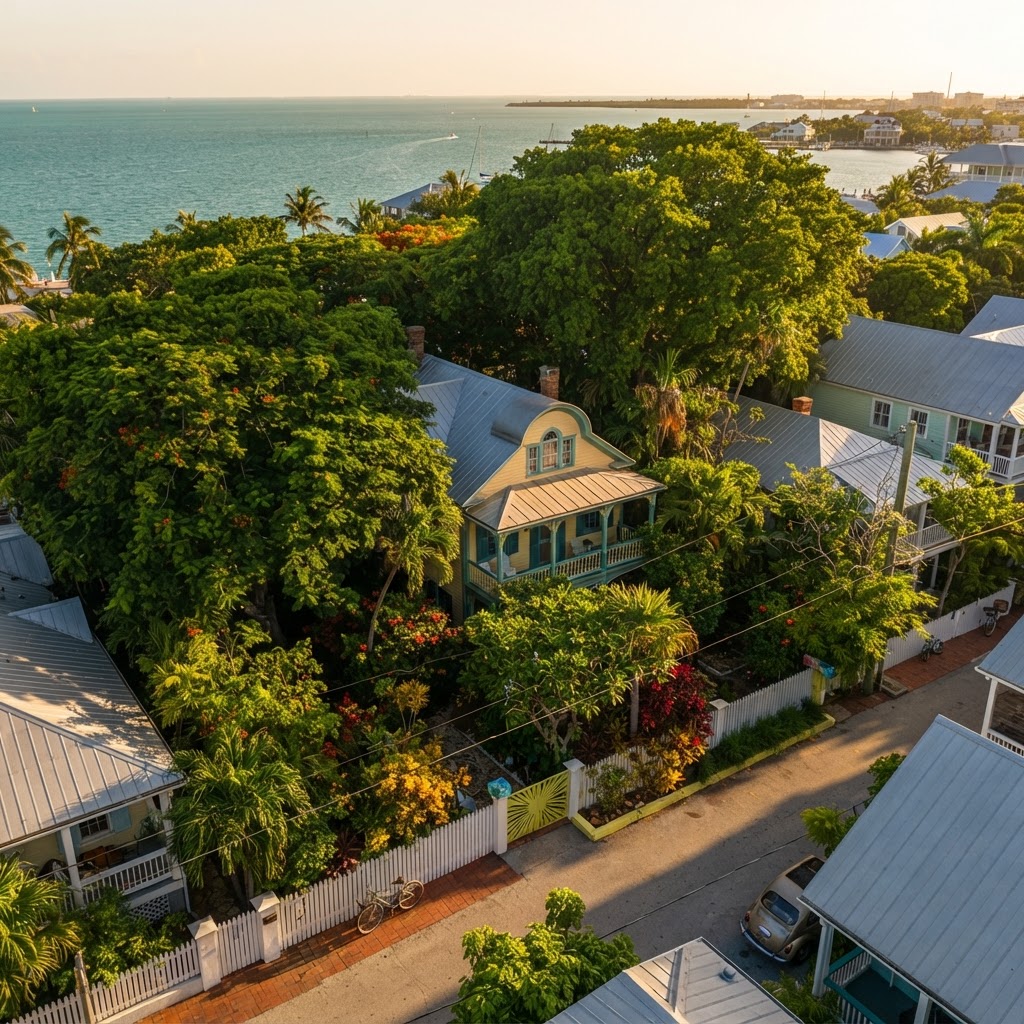
The Permanent Shift: Why South Florida's High-End Surge Matters in Key West
A Different Kind of Velocity
I was standing on the porch of an eyebrow house on William Street the other day, listening to the frangipani leaves catch the breeze while the humidity began its steady afternoon climb. It is the kind of quiet that feels earned, a moment of stillness that has defined this island for generations. In the distance, you could hear the faint, rhythmic sound of a distant street performer on Duval, but here, the pace was entirely different. It is a reminder that while the world outside moves with a certain intensity, life in Key West operates on its own distinct frequency.
However, it is impossible to ignore that the broader South Florida market is experiencing a shift that even the most casual observer would call historic. A report released on July 8, 2026, by Redfin and reported through The Mortgage Point, confirmed what many of us have been observing on the ground: South Florida currently holds the highest luxury home price premiums in the United States. In markets like Miami and West Palm Beach, high-end properties are trading for nearly nine times the price of non-luxury homes. It is a staggering statistic, one that confirms the era of the ultra-wealthy buyer is not merely a passing interest, but a defining feature of our regional economy.
The Geography of Wealth
This migration of capital toward the southern tip of the peninsula is not just about tax advantages, though those certainly provide a compelling anchor for investors. It is about a fundamental redirection of lifestyle. These buyers are looking for resilience, identity, and access to a coastal existence that cannot be replicated elsewhere in the country. They are aggressive, yes, but they are also deliberate. Even as interest rates have fluctuated, forcing a recalibration in broader housing segments, the luxury tier in South Florida has demonstrated a remarkable immunity to the usual headwinds.
For the mainland, this means high-density glass towers and sprawling gated estates. For us, here in Key West, it means something entirely different. We are not a market of scale; we are a market of scarcity. When you look at the limited number of historic conch houses with their original tin roofs and mahogany detailing, you are looking at an asset class that is effectively closed. There is no more land to carve out of the limestone. There are no more blocks of 19th-century architecture to be unearthed. Our inventory is finite, and in a market where capital is seeking exclusivity, that scarcity is the ultimate luxury.
Ownership as a Deliberate Act
In our neighborhood, the nature of these transactions is almost exclusively driven by cash. When a buyer decides to secure a piece of this island, they are rarely doing so because the financing terms are favorable. They are doing so because they understand the inherent value of the location. These individuals are often comfortable with the complexities of homeownership here, including the strategic, deliberate decision to self-insure. They view the maintenance of a historic structure not as a burden, but as a commitment to the preservation of a legacy. It is a high-level management of risk that signifies a deep, long-term confidence in the island itself.
When I walk past a Royal Poinciana in full bloom, I am reminded that the value here isn't just in the square footage or the proximity to the water. It is in the texture of the life available on these narrow streets. The premium prices we see on the mainland are a signal, certainly, but they also serve to underline our own stability. If a buyer is willing to pay a record premium for a modern condo in Miami, then the relative value of a historic, renovated home in the heart of Old Town, with its unique architectural provenance, becomes clearer than ever. It is not an apples-to-apples comparison, which is exactly why the interest in our market remains so resilient.
Looking Beyond the Numbers
We often get caught up in the optics of a record-breaking market. We talk about premiums and shifts and migrations. But the true story of Key West is told in the quiet interactions at the corner store, the way the light hits the salt-crusted shutters at golden hour, and the way the community protects its character. These are the things that money cannot build; they are what money is trying to purchase when it lands on our shores.
As we look ahead, I suspect we will see the gap between 'luxury' and 'irreplaceable' continue to widen. The mainland will continue to be a hub for massive transactions and rapid growth. Key West will continue to be a sanctuary for those who recognize that the value of an asset is ultimately tied to the scarcity of the experience it provides. Whether the market is hot or cooling, the fundamental reality of this island remains unchanged: we are not just selling houses; we are stewards of a rare and enduring way of life. The data tells us where the money is moving, but the street-level view tells us why it’s coming here. And for those who are already here, that truth is something to be celebrated.
Written by
Damian Vantriglia
Realtor® · Key West