The Permanent Shift: Why Key West Has Decoupled from the Mainland
The New Landscape of Luxury
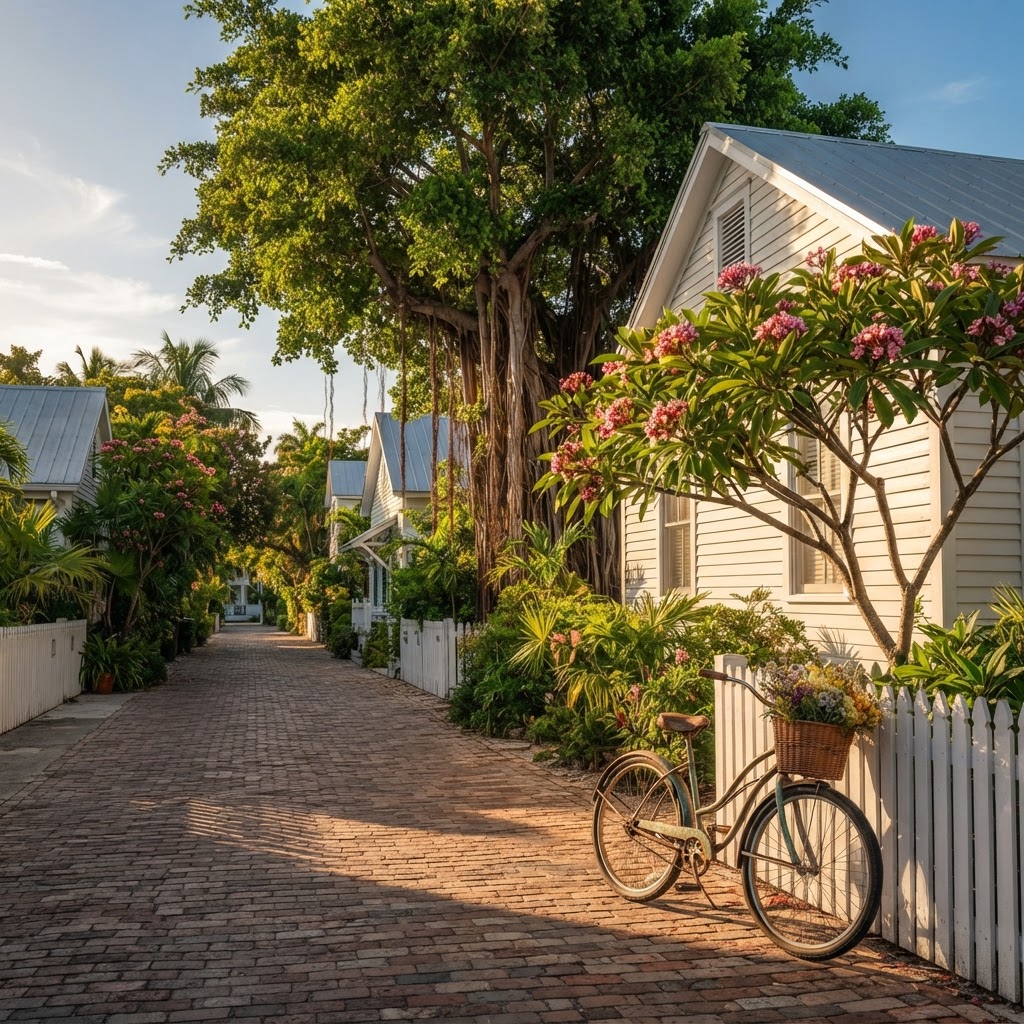
I was walking past a quiet corner in the Meadows the other day, listening to the familiar rustle of palm fronds and the distant chime of a bicycle bell, when I started thinking about the pace of change. A report from the Miami Herald on July 17, 2026, brought some of these internal thoughts into sharp focus. The data shows that Miami and West Palm Beach are currently leading the nation in a peculiar phenomenon: the widening chasm between luxury and non-luxury real estate. We are seeing luxury prices surge by 14.2% annually, while the broader market experiences a slight cooling. Essentially, the market has decoupled.
For those of us watching the island, this headline didn't come as a shock. It merely put a name to what we have been feeling on the ground for years. In the broader South Florida region, the disparity is such that high-end properties are now commanding prices nearly nine times higher than the typical home. When you look at the mechanics behind it, it is clear that we are moving into an era driven almost exclusively by cash liquidity rather than the traditional mortgage-backed buyer. The mainland is wrestling with this shift, but here on the rock, we reached this point long ago.
The Island Effect as a Constant
Key West has always been a place apart, but the current scarcity of inventory has solidified our position as a true wealth magnet. We aren't just a secondary market anymore; we are an asset class. The exhaustion of ROGO building permits has functioned as an artificial ceiling on our growth, and while that may be a frustration for those looking to expand, it has created a permanent floor for property values.
When a home in Old Town features the original Dade County pine flooring, or when you find a perfectly preserved eyebrow house with its original shutters, you are holding a piece of history that cannot be replicated. Because we cannot build more land and we cannot easily replace what is already here, the economic gravity that pulls at the mainland simply doesn't apply to us in the same way. We have stopped competing with the suburban market. We are now in the business of owning rare, finite fragments of a geographic treasure.
Rethinking Value and Risk
This shift brings up an interesting dialogue regarding how one approaches ownership today. We see many buyers coming into the island who are comfortable operating outside of the standard financing models. I often see seasoned investors choose to manage their own risk profiles, effectively practicing a form of self-insurance that views property as a long-term hold rather than a short-term hedge. It is a strategic, deliberate approach that speaks to a high level of confidence in the island’s enduring appeal.
This isn't about ignoring the realities of our climate or the logistics of island living. It is about acknowledging that for many, a home in Key West is a foundational asset. It is a place where you can smell the salt in the air, watch the royal poinciana bloom in June, and feel the history of the craftsmen who used cypress, cedar, and yellow pine to build these structures decades before we were here to enjoy them. When you understand the scarcity of that experience, the market fluctuations described in the broader news start to feel like background noise.
A Local Perspective on the Future
I often tell people that you don't buy a home in Key West because it is a smart play on a spreadsheet. You buy it because you understand that you are becoming a steward of something that exists outside the standard economic cycles of the mainland. We are living in a unique window where the world has recognized that the lifestyle we enjoy—the slow pace, the community, the sunset rituals—is the ultimate currency.
As the market continues to decouple, the gap between the haves and have-nots will undoubtedly be a topic of heated discussion in the halls of government and on the pages of the Herald. But for those of us who call this place home, the focus remains on the integrity of our neighborhoods and the preservation of the architectural character that defines us. We remain an island that isn't just surviving these changes, but one that is quietly, firmly, setting its own terms for what it means to belong here.
Written by
Damian Vantriglia
Realtor® · Key West