The Measured Quiet of Truman Annex
A Shift in the Island Rhythm
When I think of the Truman Annex, I do not think of the tourist traffic or the cruise ships that dock just beyond the perimeter. I think of the silence. There is a palpable shift in the air when you pass through the gates—a transition from the kinetic energy of Old Town into a space that feels managed, deliberate, and remarkably still. Growing up here, I remember when this area felt like an extension of the Naval Station, a place of restricted movement and quiet authority. Today, the transition into a residential neighborhood has been remarkably successful, largely because it maintained the scale of the past while offering a different kind of island experience.
The Architecture of Order
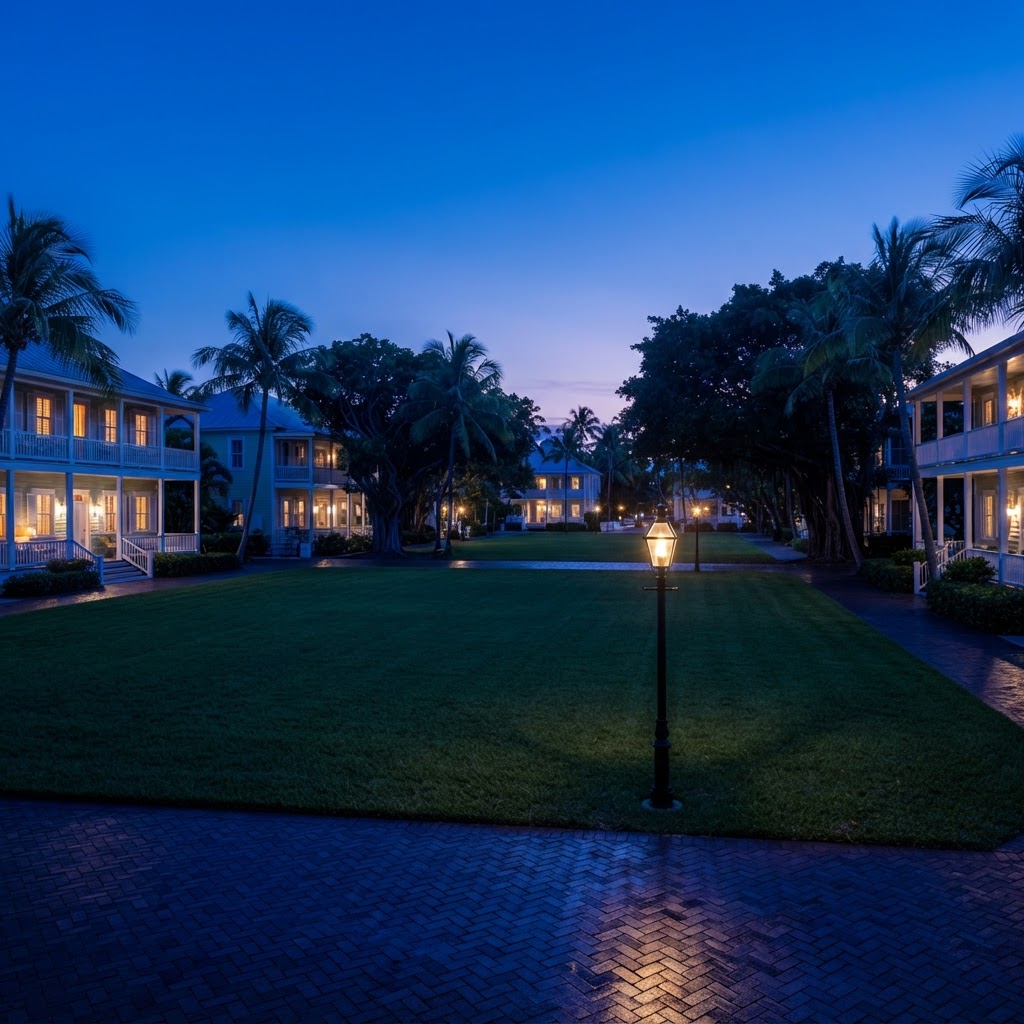
Walking the streets here—Southard, Thomas, or the lanes surrounding the Parade Grounds—you notice a level of uniformity that is rare for Key West. We are accustomed to the chaotic, charming evolution of Old Town, where every house tells a different story through its mismatched gingerbread trim or a peculiar addition. The Annex is different. It is refined and balanced, drawing heavy inspiration from the colonial architecture that defines much of our Caribbean heritage. You will find solid, structured homes with wide porches and deep eaves, built to manage the light and the heat. Many of these structures utilize sturdy framing that speaks to a later period of construction than the original Dade County Pine cottages of the mid-1800s, incorporating high-quality cypress and treated cedar that have held up beautifully under the coastal sun. It is a neighborhood that rewards those who appreciate order, clean lines, and the quiet dignity of a well-maintained streetscape.
Living Between Two Worlds
What surprises me most about the people who choose to call the Annex home is their relationship to the rest of the island. It is close enough to walk to the galleries on Whitehead or grab dinner near the harbor, yet it maintains an internal focus. The community courtyards, the manicured palms, and the swimming pools feel like a private society. There is a social rhythm here that revolves around the porch and the garden rather than the street corner or the tavern. It is a specific choice. You are opting into a lifestyle that values security and proximity without the ongoing maintenance of an antique wooden home that requires constant attention. It is a strategic approach to real estate; you trade the rugged, historic character of a 150-year-old conch house for the consistency of a planned neighborhood, all while staying within the heart of Key West.
The Weight of History
There is something to be said for the ghosts that remain. The Truman Little White House sits as the anchor of the neighborhood, a reminder that this ground has hosted significant historical moments. I have always felt that the Annex benefits from this proximity to the past. It never feels like a new development because the geography is so deeply rooted in the story of the United States Navy and the evolution of the Florida Keys. The trees here seem to have been planted with intention, framing the vistas in a way that feels permanent. When the sun hits the facades in the late afternoon, casting long shadows across the brick paths, you get a sense of why this place remains so resilient in the market. It is not just about the square footage; it is about the feeling of containment, a safe harbor in a place that is otherwise entirely defined by the open, unpredictable sea. There is a peace in that, a quiet confidence that defines the Truman Annex experience, and it is a quality that never goes out of style.
Written by
Damian Vantriglia
Realtor® · Key West