The Measured Pulse of an Island Year
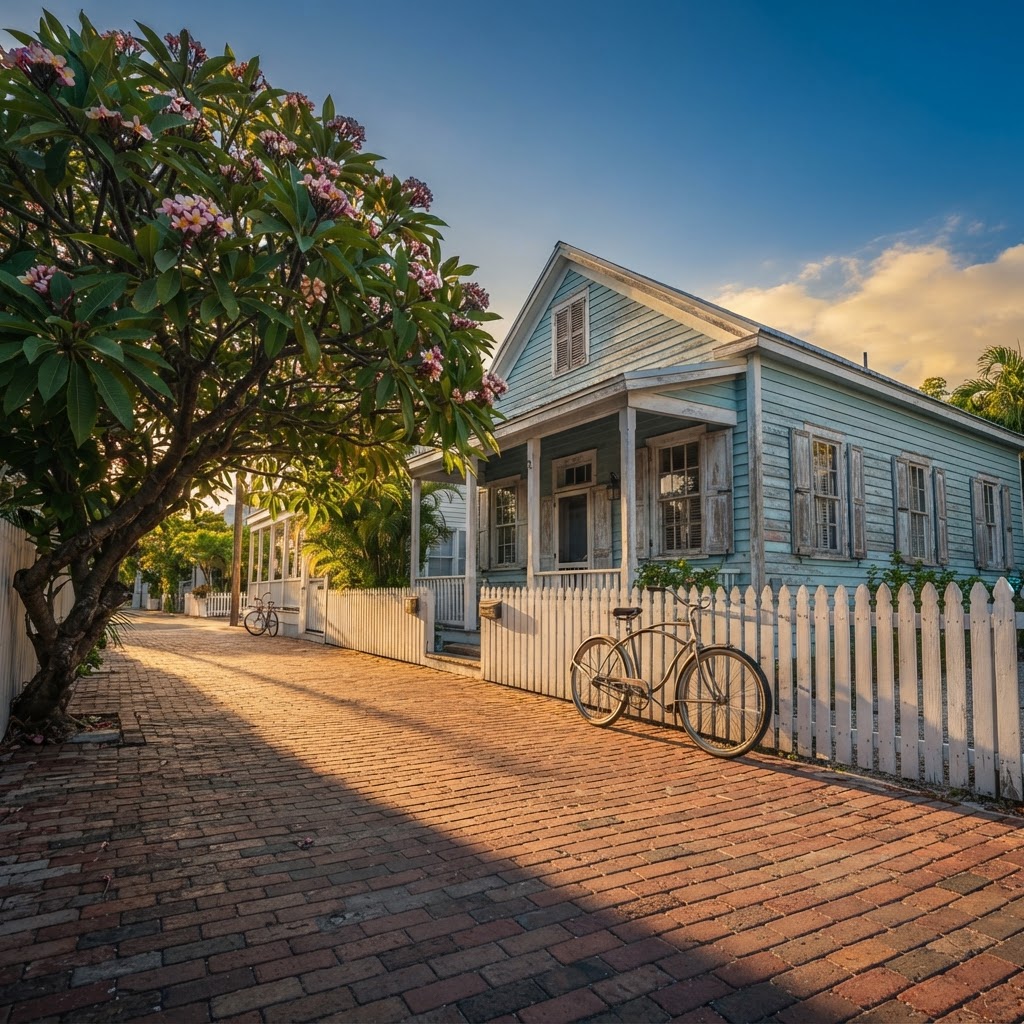
There is a specific quality to the light in October that signals the turn. After the heavy, humid stillness of late summer, the air thins just enough, and the shadows along Duval and Whitehead Streets begin to lengthen with a different intent. Growing up here, you learn to read the island not by the clock, but by the way the royal poincianas bloom or the way the trade winds shift after the final summer squalls. If you spend enough time walking the narrow lanes of the Old Town, you stop seeing the market as a series of abstract fluctuations and start seeing it as a reflection of this living, breathing place.
The Geometry of the Off-Season
When the visitors thin out and the pace of the island recalibrates, the architecture of our neighborhood takes center stage again. This is when I find myself admiring the bones of a house rather than its stage dressing. The high, airy ceilings of a classic eyebrow house are designed for exactly this transition—the movement of air, the cooling shade of a deep porch. In the quieter months, you notice the density of the Dade County pine beneath the paint, the way the structure has settled into the coral rock over a century of hurricanes and sun. For those of us who live here year-round, this is the season of maintenance and reflection. It is when the local tradespeople—the master carpenters who understand how to restore a cypress window frame or reinforce a cedar-shingled roof—can actually focus on the craft. There is a quiet confidence in buying a home when the island is at its most authentic, stripped of the temporary veneer of high season.
The Logic of the Market
People often ask me if there is a 'right' time to look at property in Key West. My answer is almost always the same: it depends on how well you know the street. The reality of our market is that the most enduring properties rarely hit the open, frantic auctions of a suburban exchange. They move through networks of neighbors and long-term owners, often through private, cash-heavy transactions that prioritize security and simplicity. Because we are a finite island, inventory is not a supply-chain issue; it is a cultural one. When I talk to a prospective owner, we rarely talk about 'investments' in the cold, corporate sense. We talk about the responsibility of stewardship. Whether you are opting to self-insure as a way to manage risk or simply preserving the historic facade of a cottage, you are participating in the preservation of a singular American neighborhood. It is a strategic decision, yes, but it is also a commitment to the rhythm of this place.
A Rhythm That Outlasts the Trends
There is a peculiar, wonderful stubbornness to Key West that defies the typical real estate cycles. We do not spike and crash with the same volatility as the mainland because the value here is rooted in something tangible—the sound of the wind through the frangipani, the specific light hitting a tin roof, the way the history of this place is layered into every street corner. When you purchase here, you aren't just acquiring square footage; you are anchoring yourself to a community that has survived pirates, wars, and storms. Whether it is a quiet evening at a small neighborhood cafe or the sight of a boat returning to the harbor at dusk, these are the assets that hold their value over a lifetime. The seasonal shifts continue, the tide comes in and goes out, and the island remains, exactly as it should be, for those who take the time to listen to it.
Written by
Damian Vantriglia
Realtor® · Key West