The Long View from the Front Porch
Understanding the Architecture of Time
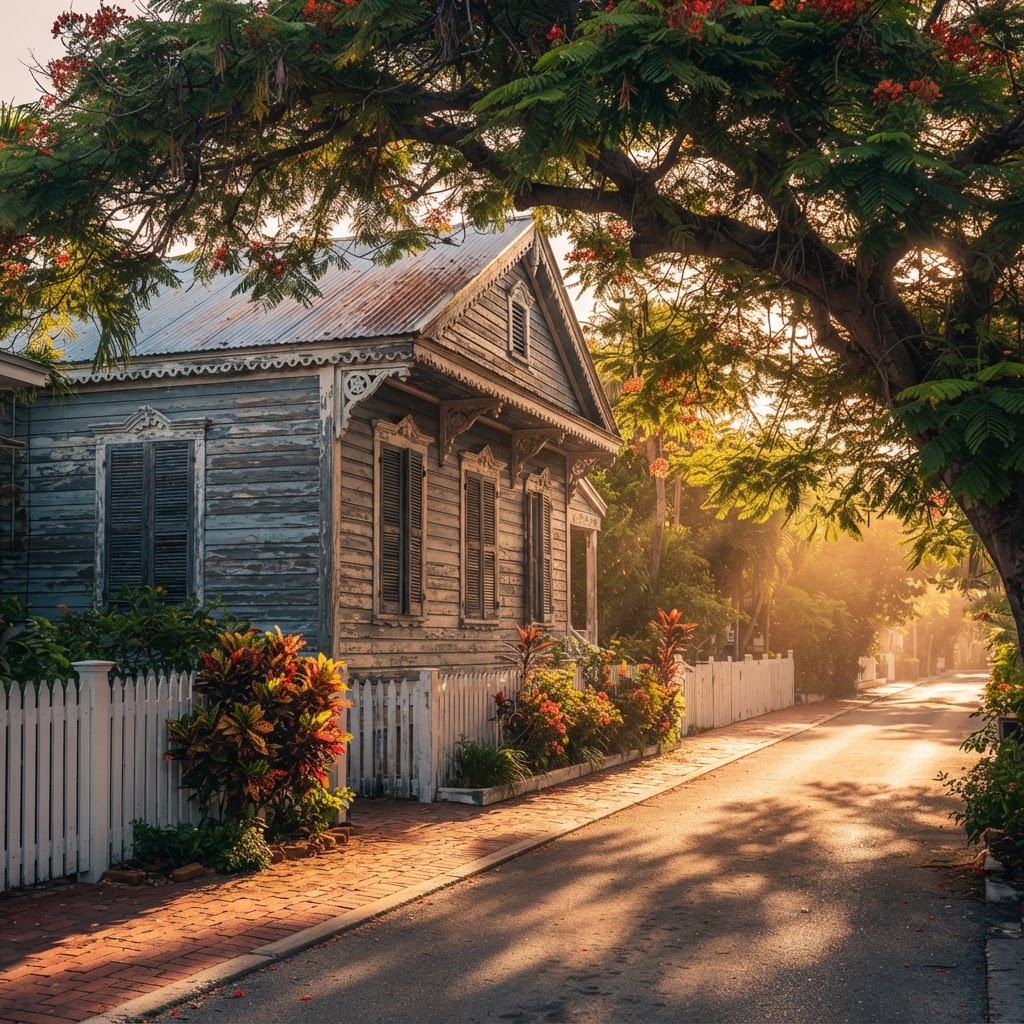
I grew up on a street where the sound of a hammer hitting a nail was as common as the morning song of the mourning doves. In Key West, you don't just buy a house; you enter into a stewardship agreement with a piece of history. Whether it is an original eyebrow house or a classic conch cottage, the bones of these structures tell the story of the island. When I walk through a property with a prospective buyer, I am less concerned with the square footage than I am with the grain of the wood. We look for that deep, dense red of authentic Dade County Pine, or the sturdy, silvered character of old-growth cedar and cypress. These aren't just materials; they are the island’s DNA. If you are looking here, you are likely looking for something that cannot be replicated by a modern build. Understanding that you are buying a living thing—one that needs to breathe, be painted, and occasionally have its tin roof inspected—is the first step toward a successful acquisition.
The Reality of the Market
There is no point in dressing up the market dynamics. Key West remains a place where cash is the primary language. When you compete for a home here, you are competing against those who understand the value of long-term stability. Financing has its place, but in this specific corner of the world, liquidity provides a level of certainty that sellers value above almost everything else. I tell my clients to keep their expectations grounded. We aren't looking for a quick turnaround; we are looking for a residence that will age as gracefully as the banyan trees downtown. If you find yourself frustrated by a price, take a walk down Duval Street or find a quiet bench in the Meadows. The market here doesn't move with the frantic energy of the mainland because the lifestyle doesn't require it to. Patience is not just a virtue; it is a financial strategy.
Managing Risk with Intention
We often talk about the logistics of property ownership, and inevitably, the conversation turns to insurance. I prefer to look at this through the lens of strategic risk management. Some of my most seasoned buyers choose to forego traditional policies in favor of self-insurance, treating their property as a long-term asset that requires a deliberate, set-aside reserve rather than a monthly premium tethered to someone else’s terms. It is a bold choice, but it is one born of confidence in the structure itself. When you have a house built of solid, seasoned timber, designed to let the trade winds pass through rather than fight them, you begin to see the island’s architecture differently. It isn't about avoiding risk; it is about owning the responsibility of your own investment.
The Value of the Neighborhood
You cannot separate the house from the garden gate or the neighbor who leaves a basket of mangoes on your porch in July. When we hunt for your property, we are also hunting for your place in the community. I think of the families who have lived on the same block for three generations, and the craftspeople—the masons who know how to work with lime mortar and the carpenters who still understand the nuances of a Bahamian shutter. These are the people who will actually make your house a home. A second home in Key West isn't an escape from reality; it is an immersion into a more focused, human-scale version of it. You want to be on a street where the afternoon light hits the frangipani just right, and where the rhythm of the day is marked by the shifting shadows on the sidewalk rather than the ticking of a clock. That is what you are really paying for, and that is what stays with you long after the closing papers are signed.
Written by
Damian Vantriglia
Realtor® · Key West