The Last Piece of the Block: What Brickell's Consolidation Means for Our Island
The Architecture of Consolidation
There is a certain rhythm to how a city changes. Sometimes it is a slow, generational shift; other times, it is a sudden, seismic restructuring that alters the character of a neighborhood overnight. Recently, the Miami Herald reported that Ken Griffin, the founder of Citadel, is in negotiations to acquire a 121-year-old historic cottage. It might seem like a small transaction in the grand scheme of his portfolio, but this cottage is the final piece of a puzzle—the last parcel required to consolidate an entire city block stretching from Brickell Bay Drive to Brickell Avenue. When complete, this will clear the way for a massive corporate and residential development. It is a powerful illustration of how institutional capital views land: as a blank canvas to be assembled, refined, and scaled.
The View from the Island
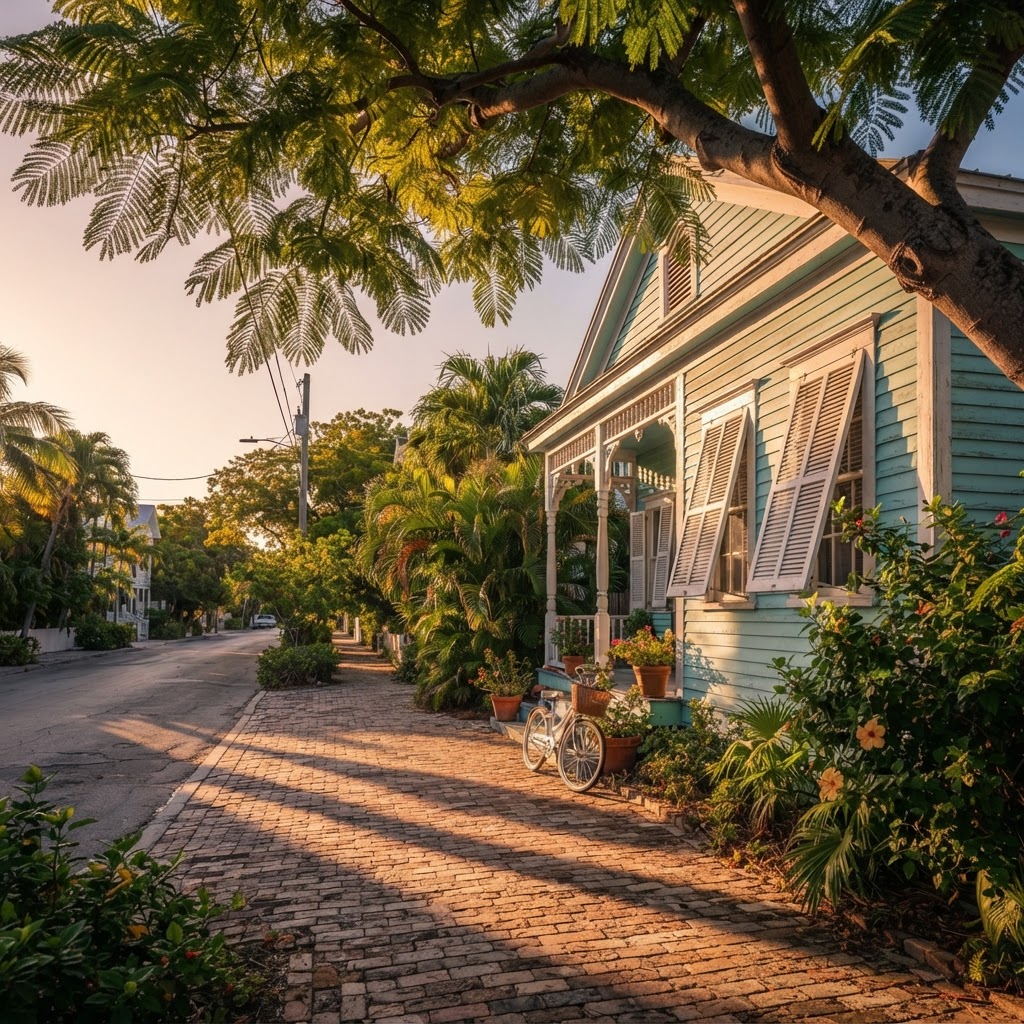
Watching this from the perspective of a born-and-raised local in Key West, the contrast could not be more vivid. In Miami, the play is consolidation—taking disparate, older pieces and knitting them into a singular, modern monolith. Here in our island home, we are fundamentally defined by the opposite. We do not have the luxury of clearing city blocks to start anew, nor would we want to. Our landscape is fixed, constrained by the water, and defined by the history already written into our streets. When I walk down streets lined with Dade County Pine or notice the specific patina on a Bahamian shutter, I am looking at a finite supply. You cannot build more 19th-century conch houses; you can only steward the ones that remain.
Scarcity as a Foundation
There is an undeniable psychological weight to land scarcity. When you see global wealth focused on acquiring every square inch of a mainland city block to 'complete the set,' it reframes the value of what we have here. In a region that is becoming increasingly dominated by these vast, institutional footprints, the singular, historic home becomes an outlier. It is a non-renewable asset. For many who move to Key West, the motivation is often an escape from the frantic, high-velocity development happening just a few hours north. The value of a property here isn't found in its potential for massive expansion or block-wide consolidation. It is found in its individuality, its place in the neighborhood, and the fact that it is a piece of a history that cannot be replicated elsewhere.
The Value of Stewardship
I often speak with clients about the responsibility that comes with ownership in an old town like this. Whether the house is framed in hardy Dade County Pine or features the structural charm of original cypress and cedar, the preservation of these homes is a form of local stewardship. When you buy a house on an island, you are essentially becoming a custodian for the next few decades of that property’s life. Unlike the modular, replaceable nature of much of the new development happening in South Florida, these houses are built to weather the climate and the passage of time, provided they are cared for with the right materials and the right touch.
Finding Our Own Footing
It is easy to get caught up in the news of what is happening in the metropolitan centers of Florida. The scale of the capital involved is staggering, and the pace of change can feel dizzying. Yet, as I look out at the frangipani blooming in a neighbor’s yard or watch the light change over a tin roof in the late afternoon, I am reminded that our reality is different. We are not a city of 'future developments' in the traditional sense. We are a community of preservation, slow growth, and intentional living. As South Florida continues to evolve into a landscape of mega-blocks and corporate towers, the quiet, finite nature of Key West feels not like a disadvantage, but like our greatest strength. We are a rare collection of homes and histories, and in a world that is obsessed with building everything bigger, there is a profound peace in keeping things exactly as they are.
Written by
Damian Vantriglia
Realtor® · Key West