The Grammar of Key West: Living Within the Bahamian-Conch Legacy
The Architecture of Adaptation
There is a specific rhythm to walking the side streets of Old Town, a pace dictated not by the schedule of the day but by the way the light hits the horizontal cedar siding of a cottage on William Street. Growing up here, you learn to read the houses before you ever understand the construction. You recognize the eyebrow house by the way its roofline extends over the front windows, a simple, clever mechanism to keep the interior cool long before air conditioning became the standard. These homes were not built for show. They were built by Bahamian shipbuilders and master carpenters who understood the necessity of ventilation, elevation, and the specific strength of native cypress.
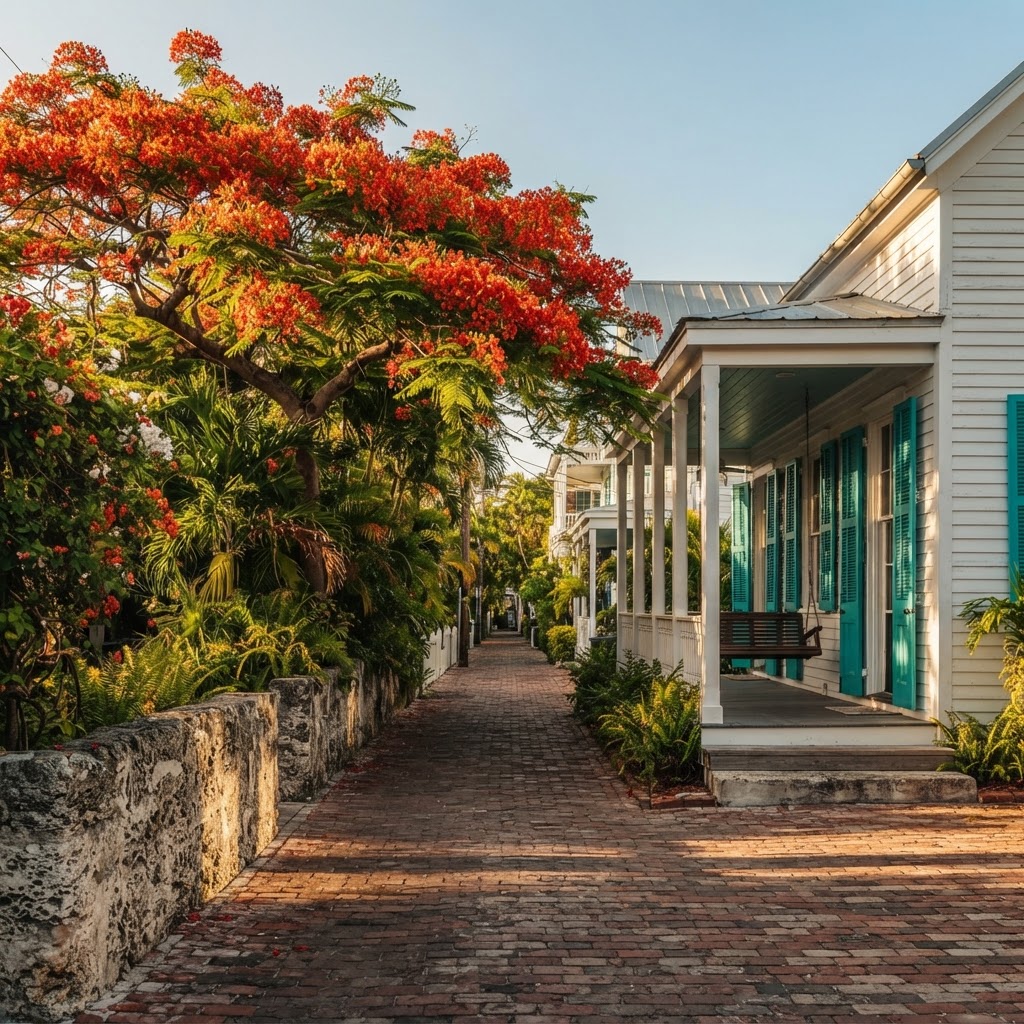
When you stand before a classic Conch house, you are looking at a structure designed to breathe. The louvered Bahamian shutters are not decorative flourishes; they are instruments of climate control. When angled correctly, they allow the trade winds to penetrate the living space while keeping the harsh, mid-day glare at bay. To inhabit these spaces today is to engage in a conversation with the original intent of the builder. It is a lesson in humility, learning to live with the house rather than imposing your own will upon it.
The Discipline of Preservation
Preservation in Key West is rarely about holding something in amber. It is an active, demanding, and immensely rewarding commitment. When a client asks about the maintenance of a century-old property, I tend to shift the conversation toward the reality of materials. You are working with wood that is denser and more resilient than almost anything milled today, but it still requires the constant stewardship of the local climate. The salt air, the relentless sun, and the occasional storm are not enemies to be defeated, but variables to be managed.
Many of my clients in this segment operate within a landscape where cash transactions are the expected standard. When you remove the friction of traditional financing, you gain a different kind of autonomy. This extends to the broader management of the asset, including the decision by some owners to self-insure. It is a strategic choice, one that requires a clear-eyed assessment of one’s own risk tolerance and the long-term financial health of the property. It is not a decision made out of necessity, but one made from a position of control. For those who choose this path, the home becomes a long-term holding, insulated from the fluctuations and mandates of institutional requirements.
The Garden as an Extension of the Floor Plan
One cannot discuss the architecture of Old Town without addressing the threshold between the interior and the exterior. In a northern climate, a porch is a place you visit; here, it is a room you live in. The transition from the living room to the garden is almost imperceptible. I often tell prospective buyers to look past the square footage of the interior and focus on the orientation of the garden. A well-placed royal poinciana or a screen of jasmine can dictate the temperature and the privacy of the entire property.
There is a profound quiet that comes from sitting in a walled garden on a street like Olivia or Southard, listening to the distant sound of a bicycle tire on brick or the low hum of a boat motor leaving the harbor. The garden is where the house settles into the island. It is where you find the frangipani that drops its blossoms on your terracotta pavers, marking the passage of seasons that are far more subtle than the ones on the mainland. If the house is the skeleton, the garden is the soul, and the two are entirely inseparable.
A Quiet Permanence
There is a tendency in the current market to view real estate as a series of transient assets. In Old Town, however, the architecture encourages a different relationship. These houses have outlived countless owners, storms, and economic cycles. They remain because they are structurally honest. When you acquire a piece of this history, you are effectively serving as a custodian for the next cycle.
There is a deep satisfaction in knowing that the roofline you maintain today will look much the same to the person who walks by fifty years from now. It is a grounded, steady way to live. There is no need for the excess or the noise that defines so much of the modern world. Here, the beauty is found in the simplicity of a tin roof after a rain shower, the durability of a cypress beam, and the knowledge that you have placed your stake in a corner of the world that knows exactly what it is.
Written by
Damian Vantriglia
Realtor® · Key West