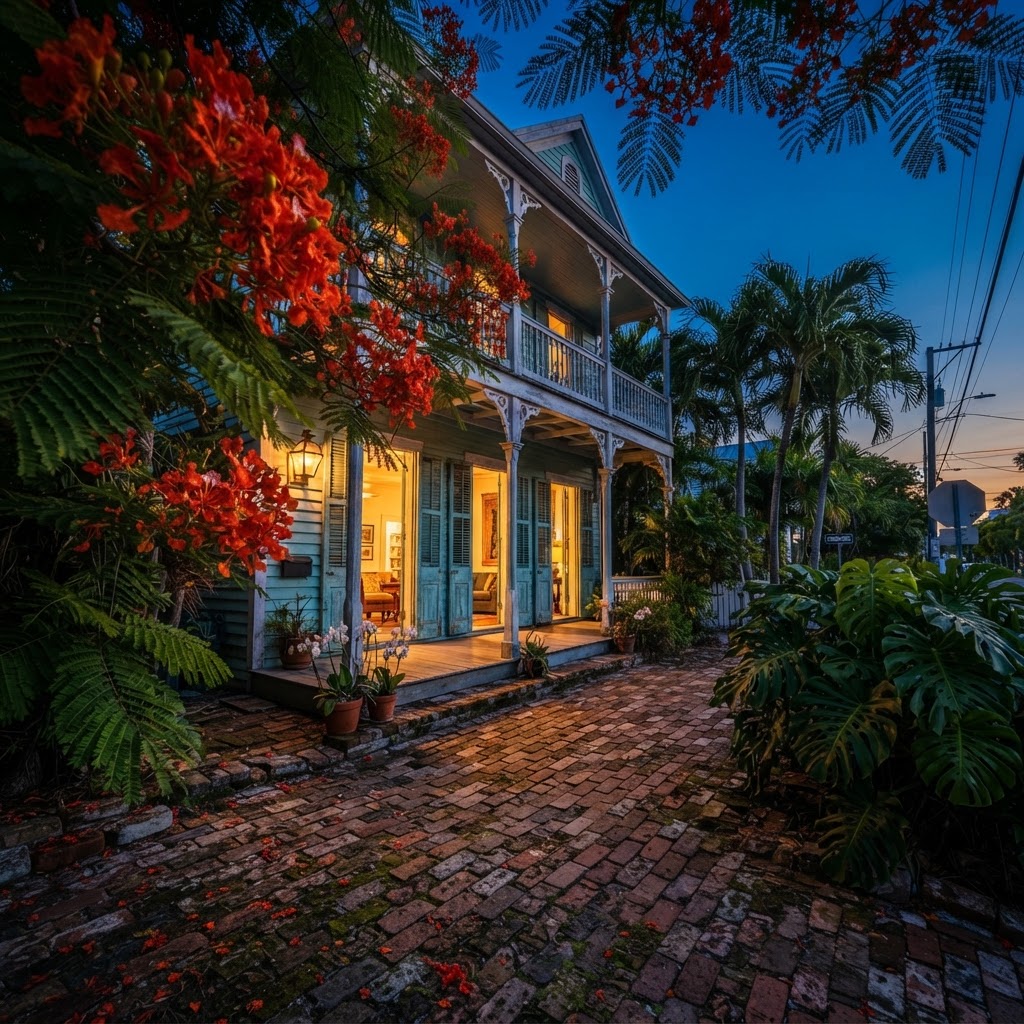
The Currency of This Island
I remember standing on the porch of a small eyebrow house on Olivia Street about fifteen years ago, watching the afternoon light catch the grain of the original Dade County pine floorboards. The owner, an older gentleman who had maintained the property with a kind of reverence usually reserved for family heirlooms, was showing me the brass hardware on the front door. We weren't talking about closing dates or interest rates; we were talking about the density of the wood and the way it had resisted the salt air for over a century. That house, like so many here, didn't need a bank’s approval to prove its value. It had the weight of history behind it.
The Architecture of Certainty
When we talk about the local real estate market, there is a recurring theme that often surprises those coming from mainland cities: the prevalence of cash. It isn’t necessarily about an abundance of wealth in the abstract; it is about the reality of the property itself. Traditional lending often struggles with the idiosyncratic nature of a home built in the 1880s. When you are dealing with irregular foundations, foundations built on coral, or framing made of that dense, slow-growth Dade County pine that no bank inspector quite knows how to categorize, the conventional mortgage process can become a slow-motion collision with bureaucracy.
Buyers who have spent time here eventually realize that the most efficient way to secure a piece of this island is to bypass the complexities of traditional financing. It is a strategic choice. By arriving with a cash offer, you are offering the seller certainty. In a place where community is small and transactions are often personal, that certainty is worth more than a higher offer contingent on a dozen hurdles.
The Logic of the Unencumbered
There is also a quiet, strategic element to the way we manage ownership here. I have worked with many buyers who, after seeing the way our buildings hold up to the wind and the salt, choose to allocate their resources toward robust structural integrity rather than interest payments. This extends to how people view insurance as well. For those who choose to self-insure, it is rarely a decision made in haste. It is a calculated assessment of their own risk tolerance and the long-term cost of ownership. They understand that a home in Key West is a living organism; it requires regular attention, fresh paint, and a watchful eye on the rooflines. If you are prepared to steward the property yourself, you often find that the traditional insurance market—with its rigid requirements and sometimes overwhelming premiums—becomes less of a necessity and more of a choice.
Community Over Credit
Ultimately, the market here operates on a different frequency. When a property changes hands, it is often a transaction between people who share a common appreciation for the vernacular architecture. Whether the bones of the house are cypress, cedar, or that classic Dade County pine, the buyer knows they are inheriting a piece of local heritage. They aren't just buying square footage; they are buying a seat at the table of a neighborhood that has survived hurricanes, economic shifts, and the slow, steady encroachment of time.
I’ve found that the best transactions in Key West are the ones that feel like a handoff. The previous owner passes the keys to the next custodian, and the deal is done with a handshake and a shared respect for the structure. The cash transaction facilitates this fluidity. It removes the friction that would otherwise prevent these historic houses from finding the people who will take care of them for the next twenty, thirty, or fifty years. It is an honest way to do business, and on an island where transparency and local reputation are the primary forms of currency, it just makes sense.
Written by
Damian Vantriglia
Realtor® · Key West