The Long Residency: Tennessee Williams and the Rhythm of the Island
The Slow Pull of the Southernmost Point
There is a specific quality to the light in Key West, particularly in the late afternoon, when the sun dips low enough to hit the frangipani blossoms and the white picket fences of the Old Town. It is a light that seems to slow time down, a phenomenon that has drawn creators, dreamers, and the occasional wanderer to our shores for over a century. Among those who felt this pull most deeply was Tennessee Williams. He first arrived in 1941, not as a tourist looking for a quick escape, but as someone looking for a place where the social clock might tick at a different, more humane speed.
I grew up hearing whispers about the writers who walked these same streets. They were woven into the local lore, part of the neighborhood architecture just as much as the houses they occupied. Williams lived in several places around town—most notably the house on Duncan Street—but his presence felt less like a resident and more like a permanent atmospheric fixture. When he was here, he wasn't looking for a spectacle. He was looking for the solitude that allows a writer to hear the rhythm of his own sentences, punctuated only by the occasional bicycle bell or the distant rustle of royal poinciana leaves.
Creating in the Shade of the Conch House
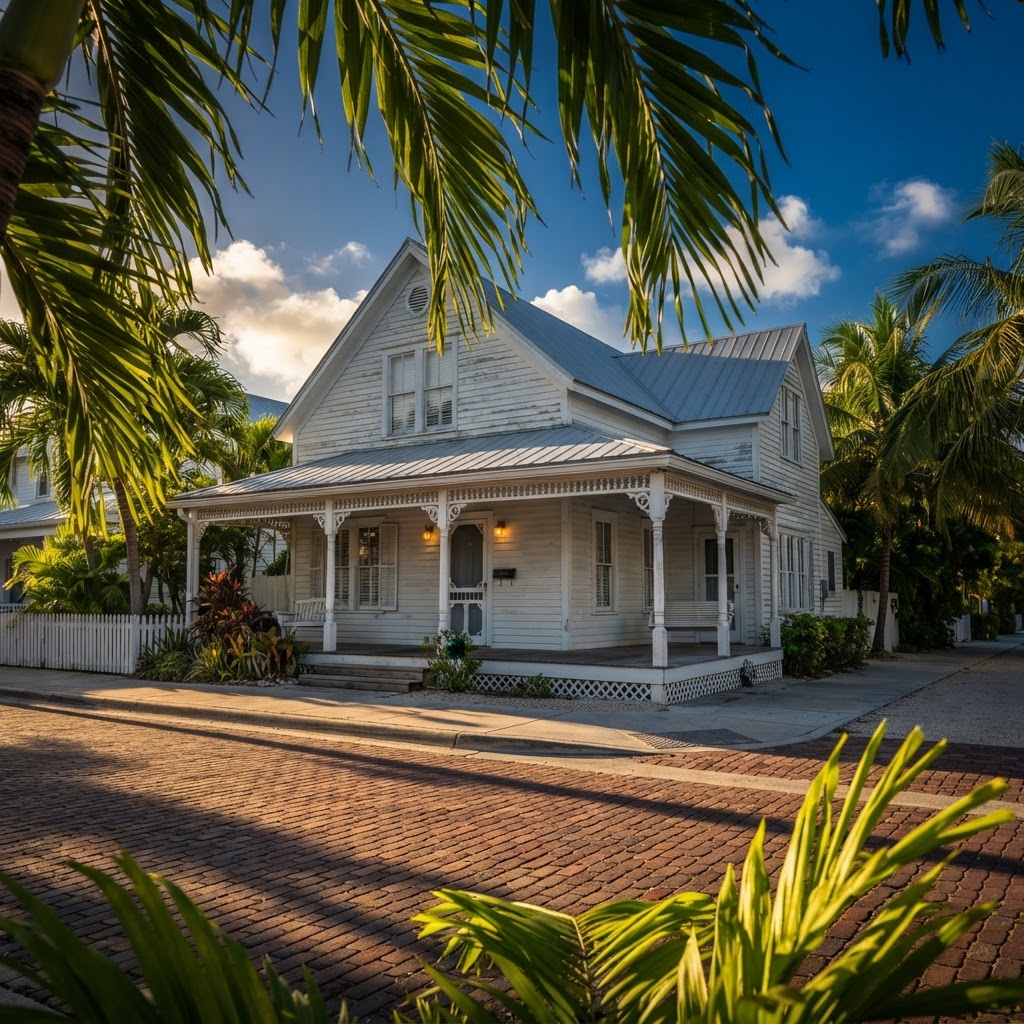
Walk down almost any street in the historic district and you are looking at a masterclass in adaptation. These homes, built with the intention of breathing, were designed for a climate that demands patience. Whether it is the sturdy, termite-resistant grain of old-growth Dade County pine or the aromatic durability of cypress and cedar, these structures were meant to endure the salt air and the long, humid stretches of summer.
Williams understood this. He didn't come to Key West to build a monument; he came to work. He finished A Streetcar Named Desire here, and one can easily imagine him pacing the length of a wrap-around porch, the air thick with humidity, looking for that next perfect line. There is a distinct, understated power in these houses. They don't impose themselves on the street; they invite you in. They are humble, refined, and built with a structural integrity that seems to encourage clear thinking. The history of Key West is held in the bones of these buildings, and for a writer like Williams, that history provided the necessary backdrop for some of the most influential American theater of the twentieth century.
The Aftermath of the Residency
Today, we treat our literary history with a quiet reverence. You won't find neon signs or heavy-handed plaques on every corner. Instead, we let the houses speak for themselves. You walk past the garden gates and you realize that the privacy Williams sought is still the most valuable amenity we offer. There is a reason why people continue to gravitate toward these specific blocks, seeking a life that isn't measured by the frantic pace of the mainland. It is the ability to walk to the docks for fresh snapper, to sit in a garden in December, and to feel the weight of the world lift just a little.
Owning a piece of this history is a commitment to that same pace. It’s not about finding a trophy; it’s about participating in a continuous thread of island life. When you restore an eyebrow house or maintain the integrity of its original Bahamian shutters, you are doing more than protecting an asset. You are maintaining the stage set for the next generation of island life. We are stewards here. We look after these properties, we look after our neighbors, and we try, as best we can, to keep the island’s peculiar, beautiful rhythm intact. It is a simple philosophy, perhaps, but it is one that has sustained us for a very long time.
Written by
Damian Vantriglia
Realtor® · Key West