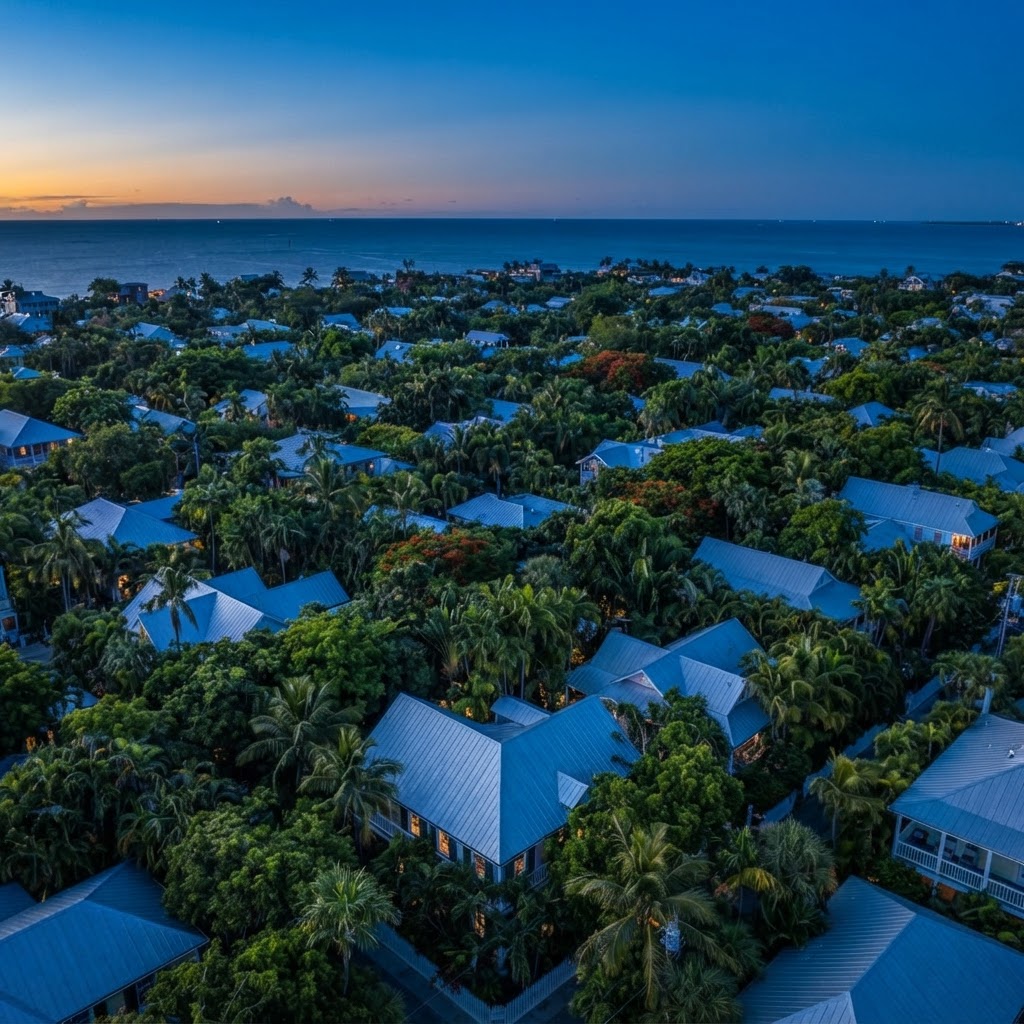
Mainland Shifts and the Island Constant
The rhythm of a Tuesday morning in Key West rarely aligns with the frantic pace reported in the headlines from Miami or Fort Lauderdale. Yesterday, as I walked down Simonton Street, the only thing driving the traffic was a delivery truck slowing to avoid a cat darting under a low-hanging frangipani branch. It is a quiet life here, but that does not mean we are insulated from the broader currents of the Florida real estate market. The Miami Herald recently published findings that show a significant uptick in cash transactions across South Florida, accompanied by a growing inventory of available properties and a softening in the rental sector. It is a data-driven reminder that at the top of the market, buyers are becoming increasingly selective.
The Mainland Perspective and Our Reality
When we look at these regional trends, the narrative is one of correction. For years, the mainland market moved with a velocity that often defied traditional logic. Now, as inventory expands, high-end buyers are exercising the kind of patience that has always been the hallmark of a seasoned investor. They are looking for quality, location, and the kind of architectural integrity that can withstand the test of time. In the larger South Florida landscape, this shift is providing a necessary balance. But when I look at the map—at the isolated, thin strip of limestone that holds our island—I see a different set of variables. Here, we are not governed by the same cycles of supply and demand that define a sprawling metropolitan area.
The Scarcity of the Island Ecosystem
Key West has a fixed capacity. We cannot add more historic district blocks, and the waterfront is, quite literally, finite. This geographic limitation remains the ultimate stabilizer for our market. While the mainland may see a surge in inventory as developers bring new stock online, we are constrained by the physical boundaries of the island. When a property comes to market here—particularly a well-maintained eyebrow house or a classic structure built with original Dade County pine—it is not competing against a generic inventory. It is competing against the memory of what that house has been and the potential for what it will become in the hands of the next steward.
Cash as the Universal Language
The report notes that cash transactions are surging, and in this, we share a common language with our neighbors to the north. Cash has always been the preferred currency of the island, not because of speculation, but because of efficiency. In a market where transactions require a certain level of local knowledge, cash offers a level of certainty that makes the process smoother for everyone involved. For my clients, the cash-centric nature of the Key West market isn't a reaction to mainland trends; it is simply how we have done business for decades. It is a sign of conviction. When a buyer puts their own capital into a piece of property here, they are doing so because they intend to be part of the island’s story for the long term.
Stewardship Over Speculation
There is a specific peace of mind that comes from owning a home that has survived a century of salt air and Atlantic storms. Whether the framing is dense, slow-growth Dade County pine or the resilient cedar and cypress that our later builders favored, these structures represent a craft that is increasingly rare. I often tell my clients that they aren't just buying a deed; they are entering into a long-term contract of maintenance and appreciation. The current market volatility seen on the mainland serves as a quiet reminder of why we live here. We are not just chasing trends; we are tethered to a place that has its own gravity. As the rest of the world navigates its shifting tides, we remain anchored by the simple, beautiful fact that we are lucky enough to be here at all.
Written by
Damian Vantriglia
Realtor® · Key West