Living the Pace of New Town
When I was growing up here, the unspoken dividing line of Key West felt much sharper than it does today. If you lived 'down island' in the historic district, you were defined by the tight grid of narrow streets, the proximity to the harbor, and the maintenance of century-old Dade County pine. If you lived in what we call New Town, you were part of a different rhythm entirely. As a kid, I remember the transition from the bustling density of the downtown core to the relative openness of the neighborhoods past White Street. It was a place of wider lots, mid-century architecture, and a quiet, residential consistency that felt like its own small town within our larger one.
A Mid-Century Evolution
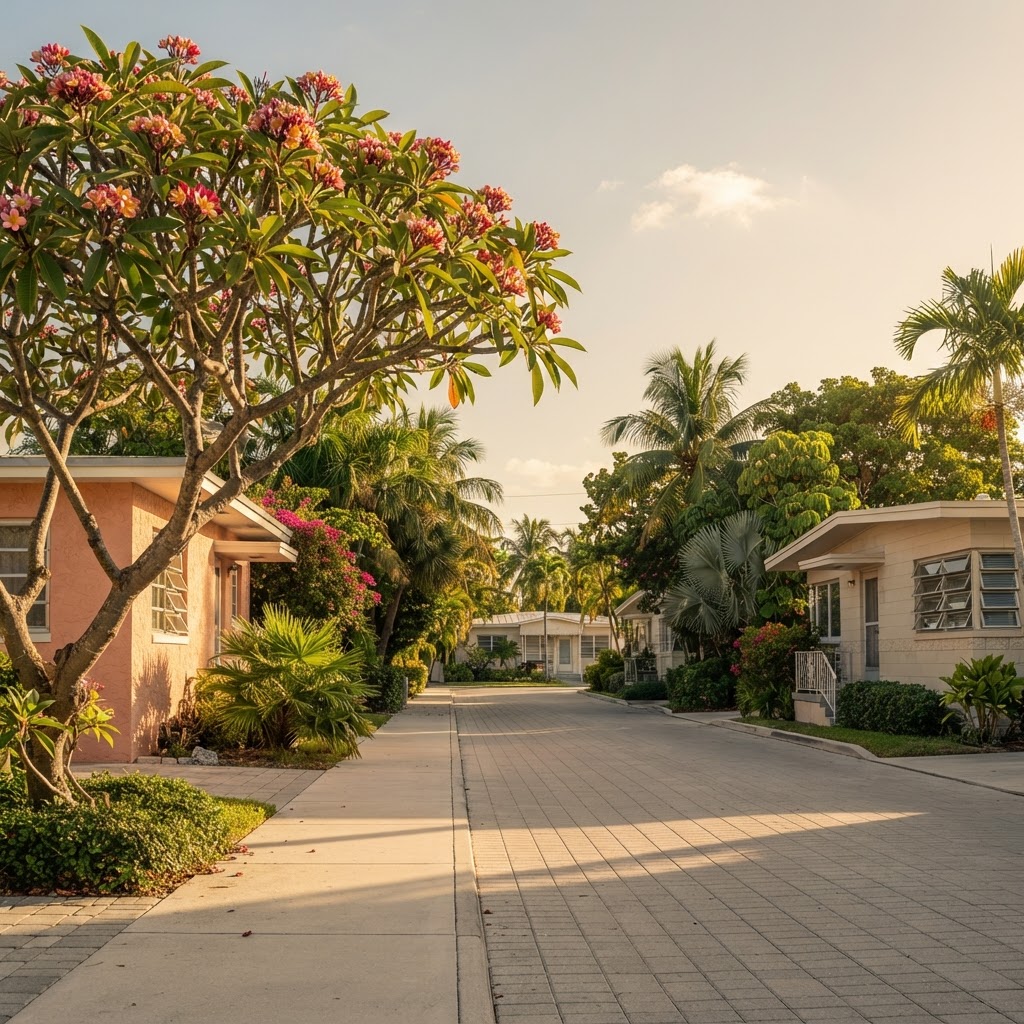
The narrative of New Town is one of growth and adaptation. While Old Town relies on the legacy of the late 1800s, New Town began to take its modern shape during the post-war era. You see it in the architecture: modest concrete block homes, sprawling ranches, and properties that prioritized the outdoor lifestyle of the 1950s and 60s. These homes were built for a growing local population, featuring deeper setbacks and gardens that could actually accommodate a banyan tree or a cluster of frangipani without crowding the property line. It is a more utilitarian aesthetic, but one that has aged with a surprising amount of grace. Walking through these streets, you see evidence of recent reinvestment—families renovating these sturdy structures, lifting ceilings, and opening up floor plans while respecting the original footprint.
The Practical Advantage
There is a pragmatic reality to living in this part of the island that is hard to ignore. When you look at the real estate landscape here, you aren't paying for the scarcity of a historic conch house, but you are gaining a different kind of value. The lots are larger, which often means more breathing room between neighbors and the ability to have a pool that doesn't consume your entire backyard. For many of my clients, this is a strategic choice. They want the Key West experience—the proximity to the water, the lack of traffic, the constant sea breeze—but they prefer a home that functions as a modern, low-maintenance base. It is a rare thing to find this kind of space on an island, and those who settle here often find they have the freedom to curate their own version of island life without the strictures of historic preservation boards.
Life Beyond the Tourist Trail
What I appreciate most about New Town is that it remains, stubbornly, a place where people live their actual lives. You aren't navigating crowds of day-trippers to get to the grocery store or the gym. You have access to the local hubs—the centers of gravity where you see the same faces every morning. I still visit the same spots near the middle of the island that my father favored. It is a neighborhood where the community is defined by who is at the local deli or the hardware store, not by who is staying in a nearby vacation rental. The proximity to the newer marina facilities and the ease of getting on and off the island make it a functional choice for those who are still working, or for retirees who want to be able to jump in the car and reach a specific corner of the island without a twenty-minute traverse of the historic district.
The Quiet Appreciation
There is a specific kind of confidence required to choose New Town. It doesn't have the famous silhouette of the Ernest Hemingway Home or the legendary nightlife of Duval Street. It asks for nothing from the observer. It simply offers a place to inhabit, a quiet street with a Royal Poinciana casting a shadow over a drive, and a neighborliness that feels authentic and unforced. When I help someone find a home here, we aren't chasing the romance of the 19th century; we are building a foundation for a long-term presence on the island. It is a different kind of investment—one based on the stability of the neighborhood and the simple, persistent joy of knowing exactly where you are, and why you are there.
Written by
Damian Vantriglia
Realtor® · Key West