The Grammar of Our Streets: Understanding the Bahamian-Conch Vernacular
The Language of Wood and Wind
There is a rhythm to walking through Old Town that is entirely different from the pace of the mainland. It is dictated by the narrowness of the streets and the way the light catches the white-washed cedar siding or the deep, honey-hued patina of exposed Dade County Pine. When I was growing up here, I didn't think much about why our houses were built the way they were; they just were. It wasn't until I began working in real estate that I started to look closer at the joinery, the pitch of the roofs, and the deliberate placement of every louvered shutter. These aren't just decorative flourishes. They are an engineering response to a geography that demands both shelter and airflow.
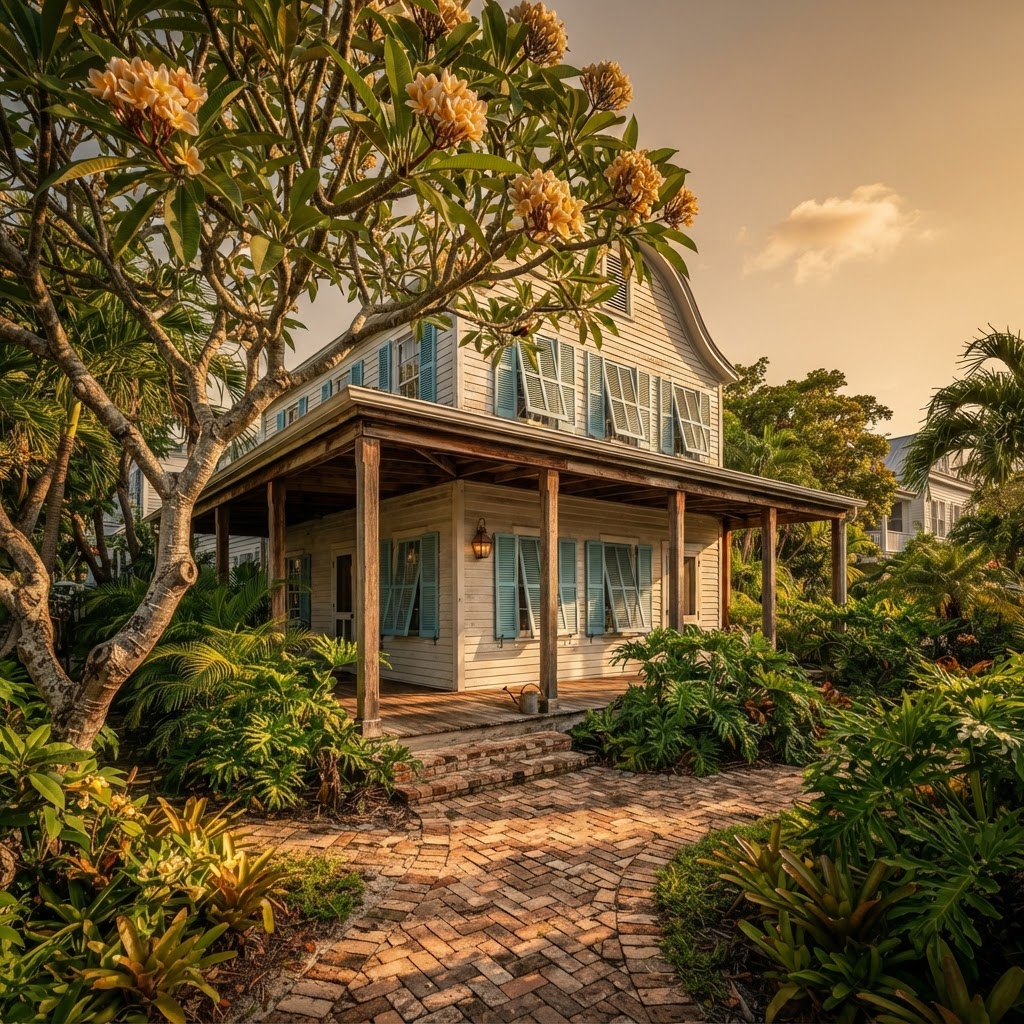
The Bahamian-Conch style is, at its core, a conversation between a house and the climate. You see it most clearly in the 'eyebrow' houses—those classic structures where the upper-story roof extends down over the windows like a brow, shielding the interior from the harsh tropical sun while still allowing the breeze to circulate. It is an honest architecture. When you walk past a home that has survived a century of salt air and hurricanes, you are looking at a masterclass in material selection. The Dade County Pine that forms the bones of these buildings is legendary for its density and insect resistance, a gift from forests that once stood tall before the islands were fully developed. Where that hard-won timber wasn't available, cypress and cedar stepped in, performing with a reliability that modern synthetic materials rarely match.
The Craft of the Courtyard
One of the aspects of historic Key West living that I find most compelling is the transition from public to private space. In many of the larger estates, the main house often sits proud and close to the street, presenting a formal face to the neighbors. But behind that face, the architecture dissolves. Deep, shaded porches and hidden courtyards take over, acting as outdoor rooms where the true life of the home happens. This is where you find the influence of the Caribbean builders who migrated here in the 19th century. They brought with them a deep understanding of the 'dogtrot' design and the importance of cross-ventilation.
I often tell clients that the value of these homes isn't just in the square footage or the renovation status; it’s in the spatial logic. A well-restored property in the historic district isn't just a place to sleep. It is a machine for living in the tropics. The high ceilings, the tall, thin windows, and the wide porches work together to move air. When you stand in a high-ceilinged parlor on a quiet Tuesday afternoon, you can feel the physics of the house working. It is a quiet, cool reprieve that no central air system can perfectly replicate.
A Living Legacy, Not a Museum
There is a delicate balance to maintaining these structures. We are not living in a museum, though sometimes it feels that way when you see the meticulous care taken by a neighbor repainting their trim or restoring a set of original shutters. It takes a certain type of owner to maintain a property here—someone who understands that they are a steward, not just a landlord. Whether a buyer is looking to preserve the original Dade County Pine flooring or opts for a respectful expansion using reclaimed materials, the goal is always to keep the spirit of the house intact.
I’ve seen many properties come and go in my time, and the ones that resonate the longest are those that haven't been 'over-finished.' There is a temptation to modernize, to strip away the quirks that make a house unique, but the most refined homes are those that embrace their age. They keep the slightly uneven floors, the old iron hardware, and the garden walls that have been softened by decades of banyan roots. They allow the house to show its history.
The Quiet Authority of Old Town
When you own a home here, you become part of an ongoing narrative. The streets of Old Town have been walked by generations of residents, writers, fishermen, and artists, and that history settles into the walls. It is a reassuring feeling, knowing that your home has already seen its fair share of storms and sunlight and remains standing, just as it was meant to be. There is no need for grandiosity here. The architectural heritage of this island speaks with a quiet, persistent authority that simply doesn't require a sales pitch. It stands on its own, weathered and enduring, waiting for the next person to simply appreciate the view from the front porch as the sun dips below the horizon.
Written by
Damian Vantriglia
Realtor® · Key West