The Currency of This Island: Why Cash Remains King in Key West
The Language of the Islands
I grew up watching houses change hands like heavy, hand-carved furniture. You knew the families, you knew the porches, and eventually, you learned which ones were built with honest Dade County Pine and which had been carefully restored using seasoned cedar or cypress. Back then, a handshake often felt as solid as a deed. Today, the mechanics of how we buy and sell property have grown more complex, yet one reality remains stubbornly constant: the cash transaction.
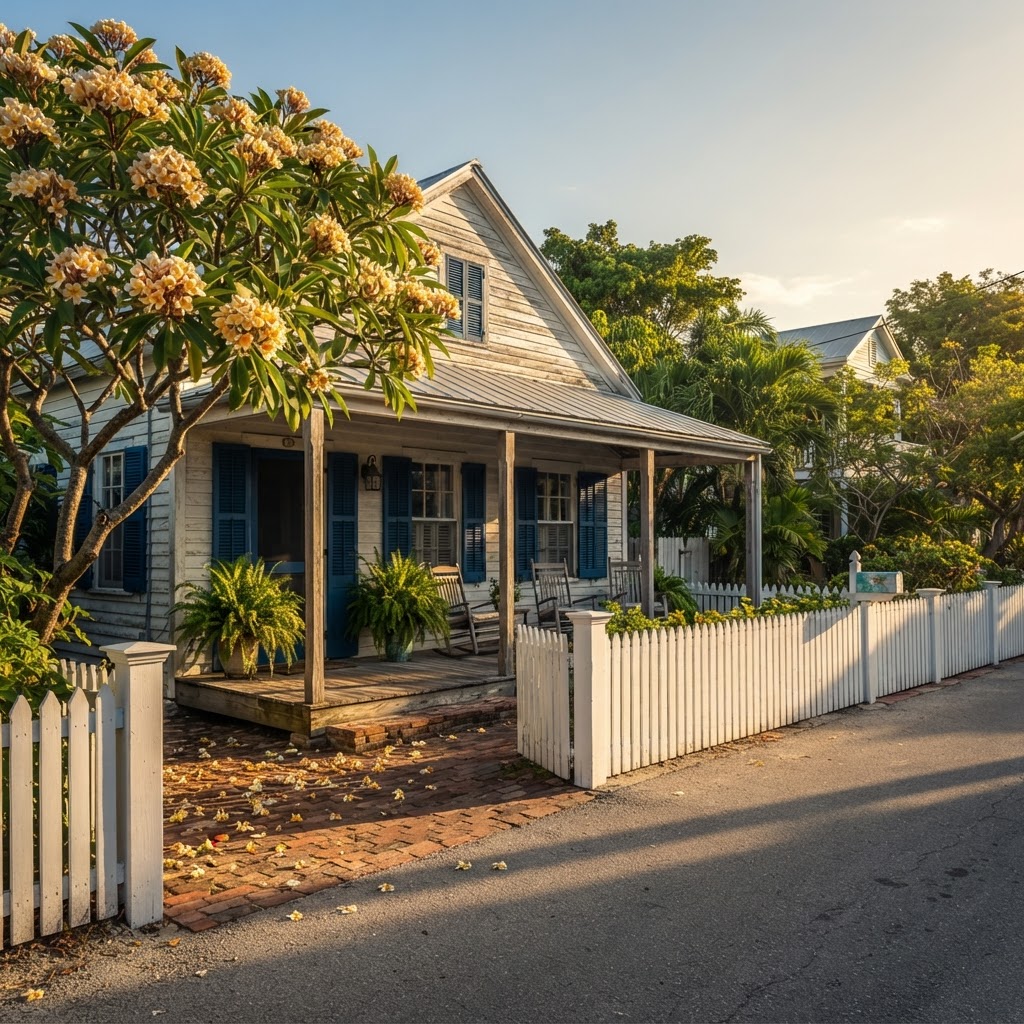
When I walk down a street like William or Simonton, past the deep, shaded porches and the cooling scent of blooming frangipani, I am not just looking at architecture. I am looking at a series of decisions made by people who saw something in this island that they couldn't find anywhere else. Most of the time, the people who end up here aren't just looking for an investment vehicle. They are looking for a place that stays put. That is why, when a property moves in Key West, it almost always moves with cash.
Why Cash Dominates the Landscape
It can be a surprise to those looking in from the outside. Why not leverage? Why not keep the capital working elsewhere? But Key West is not a market that functions on typical loan-to-value ratios or standard suburban turnover. We are constrained by geography and a rigid commitment to our historic past. Because our inventory is effectively capped—we simply cannot build more of these 19th-century conch houses—the properties themselves have become a rare, non-fungible asset.
Buyers who come here usually have a clear-eyed view of what they are getting into. They know that a historic structure, with its hand-hewn framing and its original Bahamian shutters, requires a different kind of stewardship than a new-build condo in a mainland city. A cash offer is a signal of intent. It tells the seller, and the neighborhood, that this buyer has the capacity to respect the house and the patience to navigate the rhythms of island life. It removes the friction of the lending process in a place where time, quite famously, moves differently.
The Strategic View on Risk
There is a misconception that the reliance on cash is born purely out of necessity or an avoidance of the traditional market. That isn't entirely accurate. Often, it is a strategic decision rooted in control. When you own a property here, you are participating in a long-term ecosystem. Many of our most seasoned owners choose to hold their assets with a level of self-reliance that extends to how they manage their exposure to the elements.
Choosing to forgo certain traditional insurance structures in favor of self-insurance is not a gamble taken lightly, nor is it a sign of recklessness. It is a calculated risk management strategy. It allows owners to invest directly in the structural integrity of their homes—upgrading tin roofs, reinforcing foundations, and maintaining those beautiful, resilient timbers of Dade County Pine and yellow pine that have kept these houses upright through a century of storms. By retaining that capital, the owner is betting on their own house, and by extension, on the house's ability to endure. It is a way of saying that the home is not a commodity, but a responsibility.
A Place That Keeps Its Own Time
I often think about the craftspeople who keep this place alive—the master carpenters who know exactly how to plane a piece of old-growth wood so it fits a window frame that was cut in the 1880s. These are the people who make Key West a living, breathing thing. When a buyer comes to me, I am less interested in their financial credentials than I am in their appreciation for what this place actually is.
I want them to know that if they buy the house on the corner, they are also inheriting the tradition of the neighbor who leaves a crate of mangoes on the fence, or the specific way the light hits the royal poinciana in the backyard at five o'clock. If you treat a home in Key West as a balance sheet, you might miss the point entirely. If you treat it as a home, the logic of the cash transaction begins to make perfect sense. It is the simplest way to clear the path, to walk through the front door, and to finally stop looking for a property and start living in one.
Written by
Damian Vantriglia
Realtor® · Key West