Changing Tides in the Upper Keys
A Shift in the Archipelago
There is a particular rhythm to the Florida Keys that we often take for granted. It is found in the slow turn of the tide at Garrison Bight and the way the late afternoon sun hits the Dade County Pine on a porch in Old Town. We are accustomed to a certain pace of change here, one measured more by the growth of a banyan tree than by the closing of a corporate deal. However, news arrived this week from the Upper Keys that merits a moment of reflection for anyone invested in the future of our island chain.
According to recent reporting from Hotels Magazine, a joint venture between Mast Capital and Koch Real Estate Investments has successfully acquired The Islands of Islamorada, a 142-key resort. The developers have signaled their intent to relaunch sales for 22 waterfront villas, with pricing starting at $3.8 million. It is a significant move, and one that reflects a broader trend I have been watching with interest: the institutional maturation of our real estate market.
The Price of Scarcity
When we look at the numbers coming out of Islamorada, the immediate takeaway for many is the sheer scale of the investment. But for those of us who have spent our lives watching the market here, the story is not just about the villas—it is about what this says regarding the scarcity of the entire Florida Keys. We are a finite geography. We are not making more land, and as the barriers to entry grow higher for new developments, the value of existing, established property becomes more pronounced.
What we are seeing is essentially a 'Miami-fication' of the regional high-end market. Institutional capital is recognizing that the Keys offer a lifestyle that cannot be replicated elsewhere, and they are pricing that scarcity into their models. When villas in Islamorada begin at nearly $4 million, it serves as a wake-up call to the rest of us about how the market views the value of waterfront access in the Keys. It effectively sets a floor for what the rest of the market will bear.
Why Key West Remains Distinct
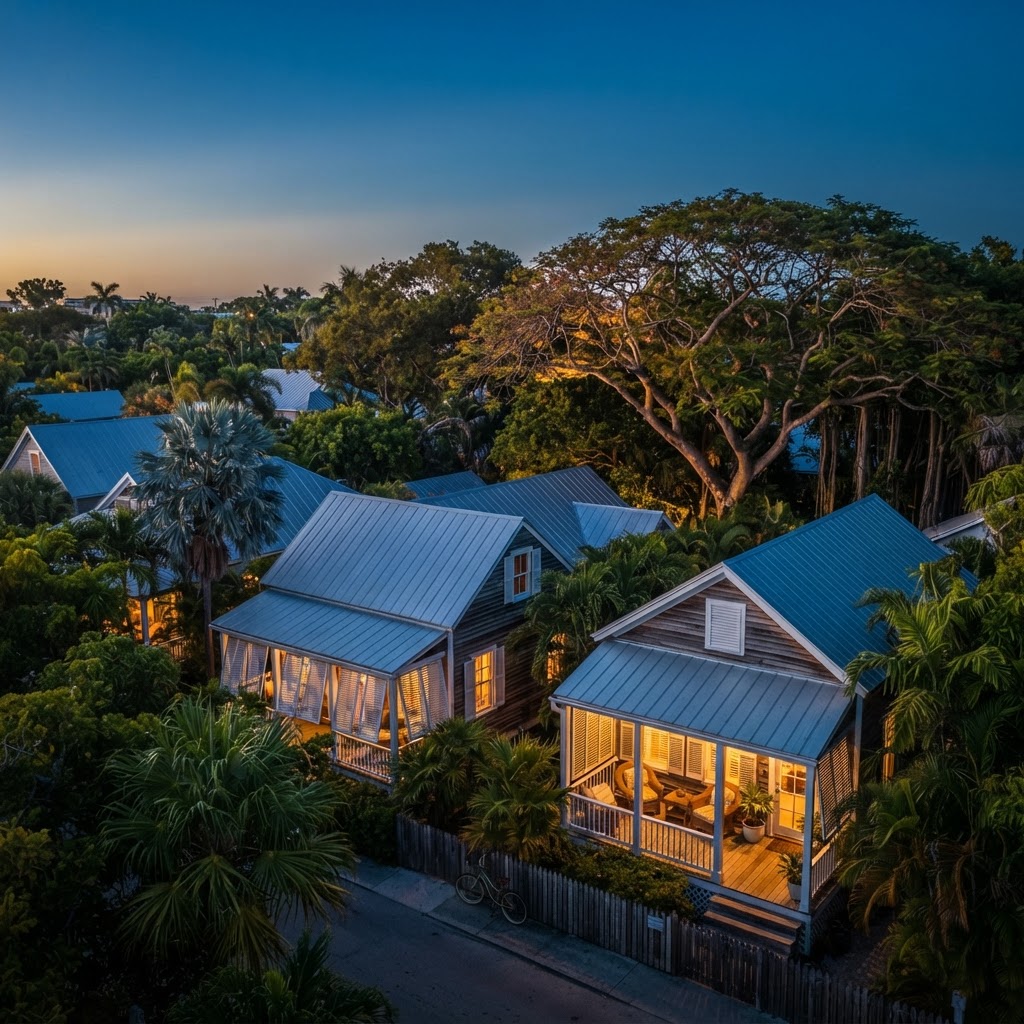
I often tell my clients that while the rest of the Keys are evolving, Key West occupies a space that is entirely its own. We are defined by our historic character—the eyebrow houses, the narrow lanes, and the centuries of culture that cannot be engineered into a resort plan. While these large-scale acquisitions elsewhere in the chain provide a fascinating study in market dynamics, they also reinforce the unique position of our local inventory.
For a long time, the appeal of Key West was simply that it was Key West. Now, as the wider market catches up to the reality of limited supply, the architectural integrity and historical significance of our local estates are gaining a new level of appreciation. Those who own a piece of this island—whether it is an early 1900s structure with original cedar floors or a home framed in dense, iron-hard Dade County Pine—are holding something that simply cannot be manufactured by a joint venture.
Observing the Horizon
It is always worth paying attention to these shifts in the ecosystem, not because they dictate how we should live or what we should buy, but because they provide context. As these larger projects take shape to the north, our island continues its own quiet, steady march forward. We have our own challenges and our own rewards. The neighborliness on William Street and the evening air at the waterfront remain our primary metrics of value.
I suspect that in the coming years, we will see more of this institutional interest moving through the Keys. My advice to those looking here remains what it has always been: ignore the noise of the headlines and focus on the character of the place. We are lucky to live in a corner of the world that holds its value not just in dollars, but in the life it allows us to lead. As the market moves, we remain exactly where we have always been—at the end of the road, surrounded by a rare kind of peace that no investor can ever truly replicate.
Written by
Damian Vantriglia
Realtor® · Key West