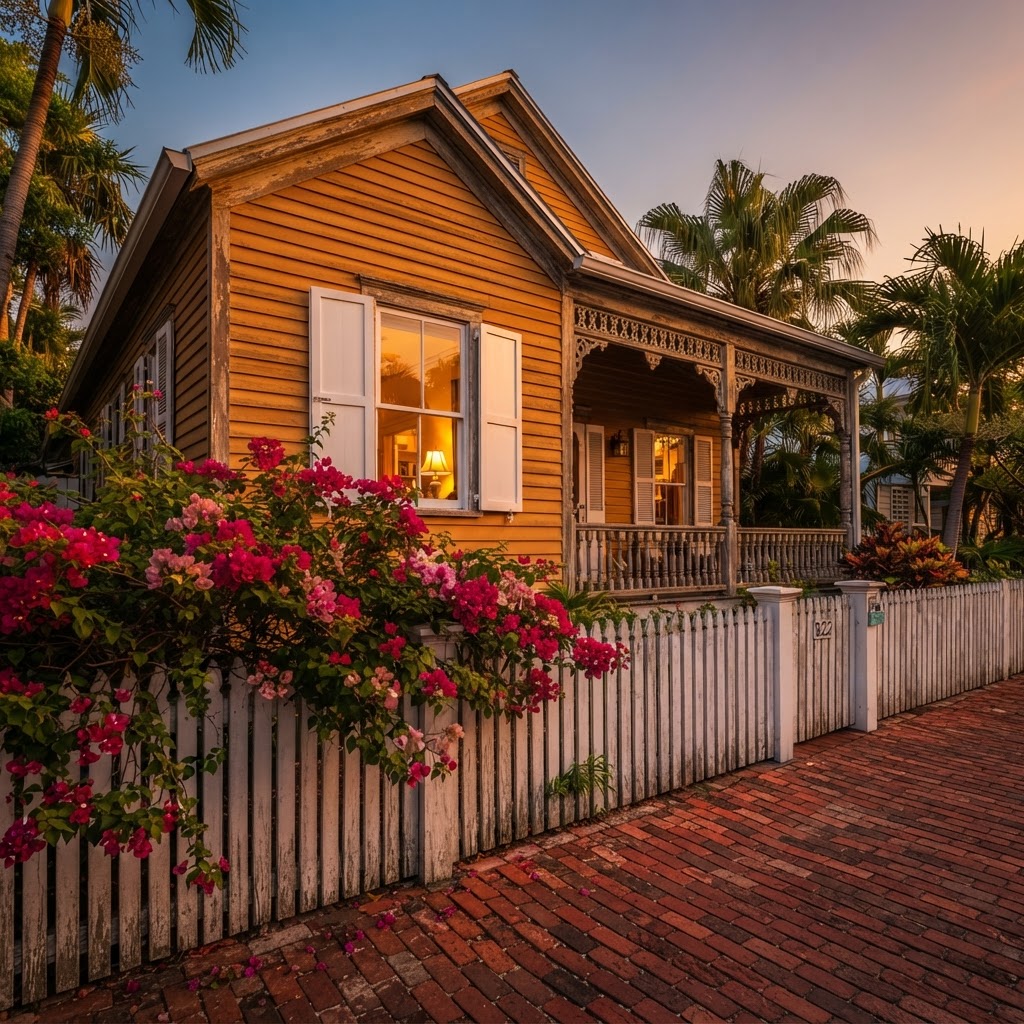
The Art of the Open Heart: Responsible Stewardship in Old Town
The sun hit the corner of William and Eaton streets at that specific, slanted angle this morning, turning the weathered wood of an eyebrow house into something that looked less like building material and more like parchment. I stood there for a moment, waiting for a friend, watching the way the light caught the grain of the century-old timber. It is easy to look at our historic homes as static museum pieces, but they are living, breathing things. They move with the tide, they swell with the humidity, and they have a memory for how this island used to be. As a born-and-raised Key West REALTOR, I often tell my clients that buying in Old Town is not an acquisition; it is an adoption. You are not just securing a square footage; you are becoming the current guardian of a specific piece of our collective history. Responsible restoration is about ensuring that this history is still readable by the time the next generation takes the keys.
What is the most important element when restoring a historic conch house?
The absolute priority is the preservation of the original structural integrity, specifically the core timber framing. Most of our most prized properties were built with Dade County Pine, a dense, heartwood-rich timber that is virtually indestructible if kept dry and maintained. When you open a wall in an 1890s house, you aren't just seeing studs; you are seeing the original soul of the island. Many people rush to rip out old framing to gain a few inches of floor plan or to modernize electrical layouts, but I advocate for a surgical approach. If you can save the Dade County Pine, you save the character. When that original wood is too far gone, we turn to period-appropriate alternatives like cypress or cedar, which offer similar longevity, but there is no substitute for the density of that original, slow-growth resinous wood.
How do you balance modern lifestyle needs with historic preservation mandates?
Balancing comfort with historic preservation requires a disciplined adherence to the original architectural language, focusing on 'in-kind' repairs and upgrades that respect the building’s envelope. The City of Key West has a rigorous HARC (Historic Architectural Review Commission) process, which might feel like a hurdle at first, but it is ultimately the reason our streetscapes don't look like every other coastal town in the country. If you need to upgrade your HVAC, hide the units behind lattice screens using traditional materials. If you need a new roof, stick with metal; it is not just aesthetic, it is the most durable solution for our climate. My advice is always to work with local contractors who have spent their lives working on these specific structures. They know that you don't use modern synthetic sealants on old wood—it traps moisture and causes rot. They know how to tension a house so it breathes. When you fight the house, you lose. When you work with its natural, centuries-old logic, you end up with a residence that is not only beautiful but structurally sound.
I think often of a small cottage over on Fleming Street that a friend purchased back in 2012. It was sagging, tired, and honestly, a bit of a mess. Many people would have scraped it. Instead, they spent two years slowly reinforcing the foundation, shimming the floor joists rather than replacing them, and restoring the original Bahamian shutters. They didn't make it perfect; they made it true. They honored the fact that the house had a slight tilt to the south, a result of a century of trade winds. By not 'fixing' the house into total submission, they maintained the vibration of the place.
Responsibility in real estate here, particularly at the top of the market, is about resisting the urge to strip away the patina. We live in a world that prizes the new, the shiny, and the sterile. Key West is the antidote to that. When you walk through a home with original pine floors, you are walking on the same surface that families walked on during the cigar-making days. Let the wood show its age. Fix the rot, yes, but leave the character. If we lose these details—the uneven boards, the hand-wrought hardware, the specific pitch of a tin roof—we lose the very thing that made us want to be here in the first place. Stewardship is quiet, often invisible work, but it is the most vital contribution any of us can make to the island we call home.
Written by
Damian Vantriglia
Realtor® · Key West