The Architecture of Resilience: Life Inside a Bahamian-Conch Home
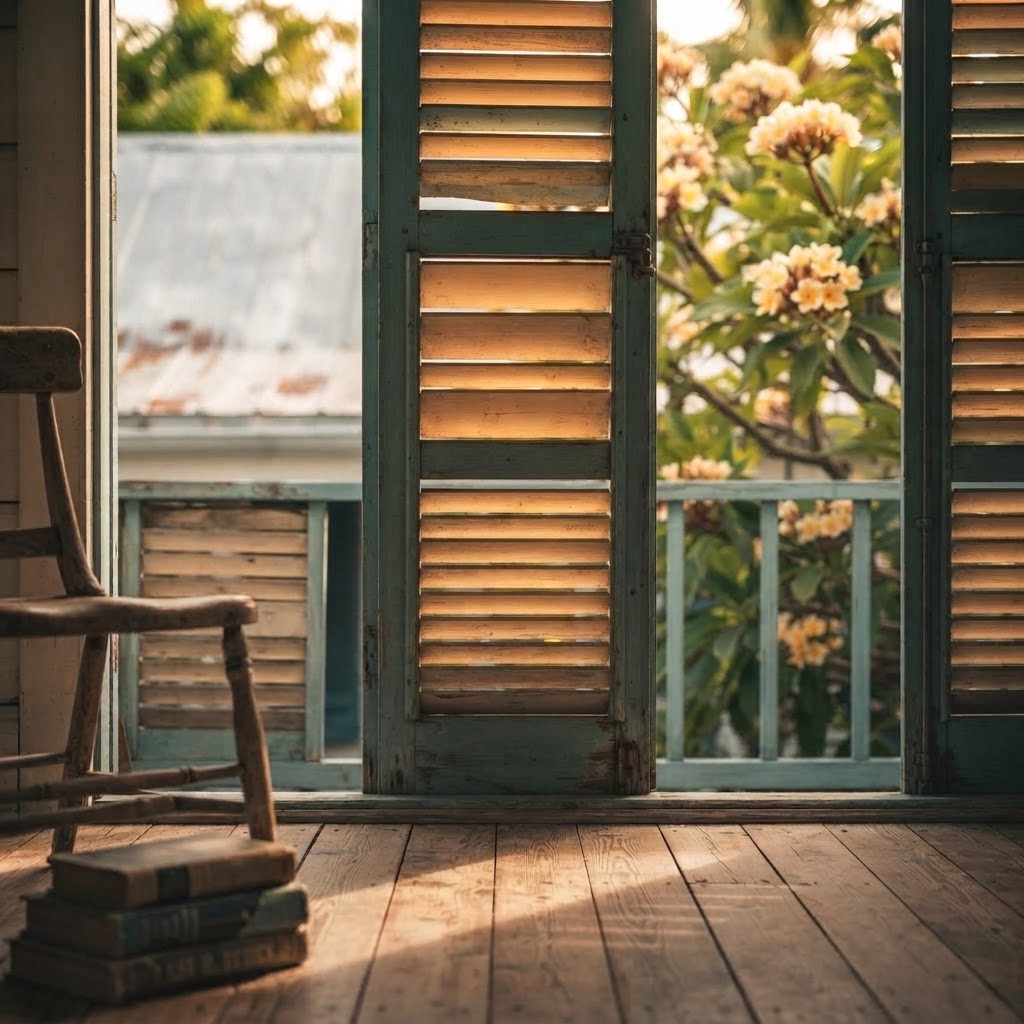
The light in Key West behaves differently than anywhere else. At four in the afternoon, it hits the heart pine siding of a century-old house on William Street, turning the weathered boards a soft, honeyed gold. You can smell the salt in the air, a constant reminder of our proximity to the straits, and perhaps the faint scent of a blooming frangipani nearby. When you walk these streets, you aren't just looking at houses. You are looking at a masterclass in adaptation.
The Anatomy of a Conch House
Bahamian-Conch architecture is often misunderstood as merely decorative. People see the gingerbread trim and the pastel shutters and assume the style is purely about charm. In reality, every detail is a response to the environment. These houses were built by shipbuilders who understood how to move air. The high ceilings and the layout of the rooms encourage a cross-breeze, drawing cooler air from the garden levels into the living spaces. The raised crawl spaces protect the foundation from the damp earth, while the sturdy cypress and heart pine framing have held steady against generations of tropical weather.
When you step onto a wide, covered veranda, you are participating in a tradition that predates modern climate control. It is a space designed for observation, a place to watch the neighborhood rhythm unfold without needing to be in the center of it. The Bahamian shutters are not just for privacy; they are functional, adjustable tools meant to soften the glare of the midday sun while keeping the house cool.
Stewardship as Strategy
Owning a piece of history in Old Town is a commitment, but it is not a burden. There is a specific peace of mind that comes from knowing you are the caretaker of a structure that has already proven its worth. In the current market, the majority of the most significant acquisitions are cash transactions. This shifts the focus from financial engineering to the long-term utility of the asset. When you own a property outright, the calculation changes. You start to view maintenance not as an expense, but as a form of capital preservation.
Many of my clients choose to manage their risk through self-insurance, treating the potential costs of storm mitigation as a strategic, deliberate allocation of their resources rather than a reactive vulnerability. It is a sophisticated way of viewing a property, one that prioritizes the intrinsic value of the home’s construction over the shifting tides of the institutional insurance market. It requires a certain confidence, certainly, but it also allows you to invest your energy directly back into the house itself, ensuring the historic integrity remains intact.
The Quiet Joy of Living Local
Living in an eyebrow house or a classic shotgun cottage changes how you interact with the world. You learn the personality of your tin roof, the way it rings during a passing summer shower, and the specific sound of the royal poinciana dropping its pods. You become attuned to the scale of the island. You notice the craftsmanship in the brass hardware on the front door, the uneven floorboards that tell the story of a house settling into its foundation, and the lush, curated chaos of a hidden back garden.
There is a profound, understated satisfaction in turning a key in a lock that has been turned by others for a hundred years. You are not just buying a square footage allocation; you are buying into a specific, deliberate pace of life. You become part of a neighborhood where people still sit on their porches, where the morning walk to get coffee is the highlight of the day, and where the history of the island is physically present in the walls that surround you.
This isn't about maintaining a museum piece. It is about living in a house that breathes, a structure that demands you respect its origins while allowing you to define its future. There is a quiet confidence in that. It is, perhaps, the most honest way to inhabit Key West.
Written by
Damian Vantriglia
Realtor® · Key West