The Architecture of Privacy: Compound Living in Old Town
The Sanctuary Behind the Cypress Gate
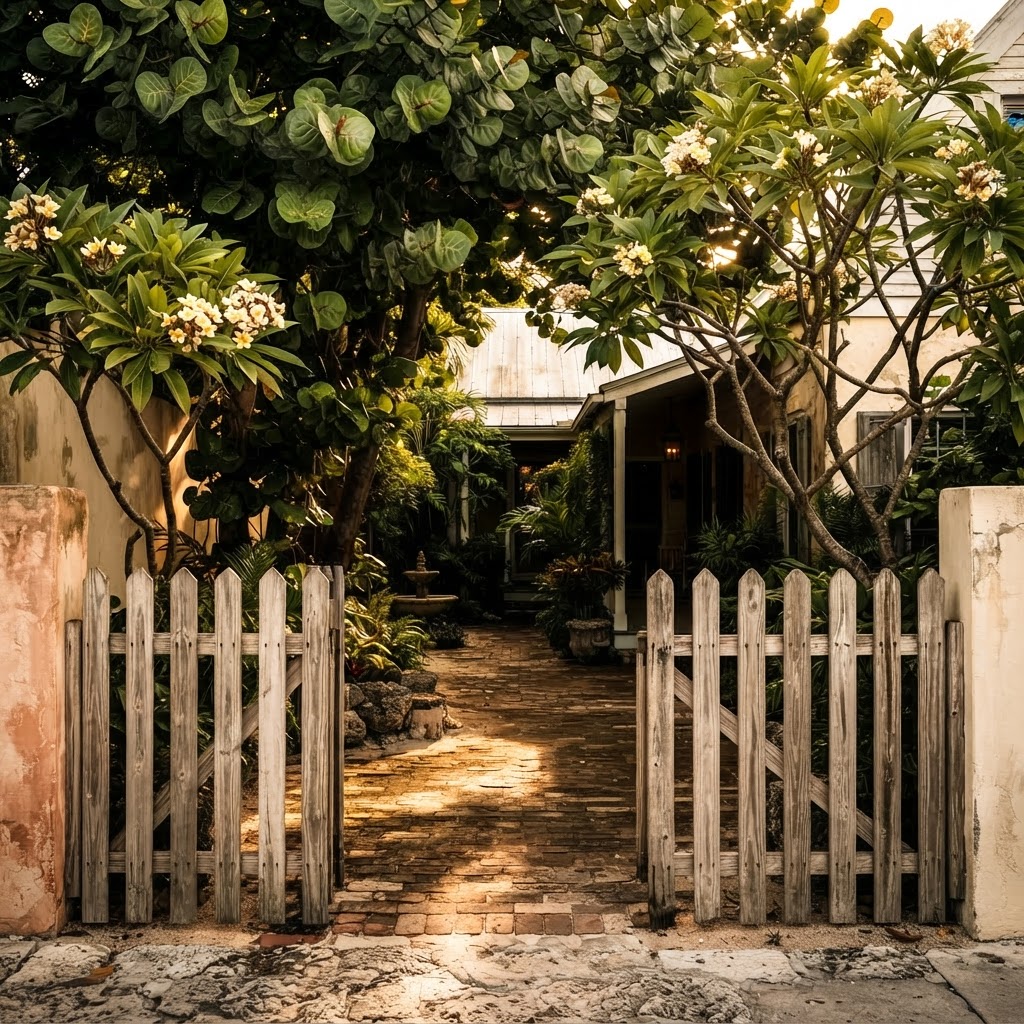
There is a particular sound to a Tuesday afternoon on Southard Street, provided the windows are open and the breeze is coming off the Gulf. It is a quiet symphony of distant bicycle chains, the rustle of frangipani leaves, and the occasional, muffled conversation from a neighboring porch. When you step through the gate of a traditional Key West compound, that sound shifts. The street noise retreats. You are no longer in a house, but in an enclosure that breathes.
Living in a compound here is different from conventional home ownership. It is an act of curation. These properties often comprise multiple structures—a main house, perhaps an original eyebrow cottage, and a detached guest suite—all gathered around a central courtyard. The layout was born of necessity, of course. Families grew, needs changed, and structures were added over the decades. But the result is a masterclass in domestic privacy that modern architecture struggles to replicate. It provides the rare luxury of being both part of a vibrant island neighborhood and entirely separate from it.
The Geometry of the Conch House
To understand the compound, you have to look at the bones of the architecture. The classic Conch house, with its steep rooflines and generous verandas, was designed for a time before climate control. Every element serves a function: the Bahamian shutters to direct airflow while shielding the interior from the glare, the tin roofs that sing in the rain, and the deep overhangs that provide respite from the midday sun.
When we renovate these structures, the goal is rarely to force them into the present. Instead, it is to respect the intention of the original builder. We replace the cedar siding with a steady hand, we restore the old-growth cypress flooring, and we preserve the patina of hardware that has survived a century of salt air. In a compound, this work extends into the landscape. We cultivate the royal poinciana for its shade and the bougainvillea for its wild, sprawling color. The garden is not just scenery; it is an extension of the floor plan. It is where you find the pool, the outdoor kitchen, and the quiet corners that define daily life in Key West.
The Mechanics of the Market
When I discuss these properties with potential buyers, the conversation often drifts toward the practicalities of ownership. Given the unique nature of our real estate market, cash remains the standard. It provides the clarity and agility necessary to secure a legacy property. There is a specific peace of mind that comes with a clean, cash transaction; it allows you to focus entirely on the property’s character rather than the hurdles of institutional lending.
There is also the matter of risk management. While the climate here is a constant dialogue, savvy owners treat insurance as a strategic choice. Many of the most established families and sophisticated investors in the Keys choose to carry their own risk, viewing the capital they would otherwise spend on rigid, high-cost insurance policies as a self-funded reserve. It is a deliberate decision, reflecting a confidence in the construction of their homes and a long-term commitment to the island. They aren't avoiding risk; they are managing it with the same measured approach they apply to the care of their historic buildings.
A Life Measured in Sunsets
Ultimately, owning an estate in Key West is a way of opting into a different tempo. It is an acknowledgment that your environment dictates your disposition. When your morning begins on a wrap-around porch and your evening ends under a canopy of stars in your own private courtyard, the external pressures of the world seem to recalibrate.
This is not a place for those looking to flip an asset or find a generic living experience. It is for the person who values the tactile reality of hand-hewn wood, the specific shade of light that hits the tin roofs at four o'clock, and the neighborly nod that reminds you that you are part of a community. You don't just own a house here; you become a custodian of a small, vibrant piece of history. And in the quietest hours of the day, when the palms are still and the garden is catching the dew, you realize that is more than enough.
Written by
Damian Vantriglia
Realtor® · Key West